Shambhala

“Jake Fades” by David Guy

"Jake Fades" by David Guy

As Buddhist ideas become more commonly known in the west, they increasingly pervade art and literature. Reviewer Hazel Colditz, herself a Buddhist and artist, was impressed by David Guy’s new novel of impermanence, Jake Fades. Author David Guy is a teacher and writing instructor residing in North Carolina. A graduate of Duke and author of several books, he reviews books for newspapers and is a contributing editor to Tricycle: The Buddhist Review.

Jake Fades is a novel of impermanence. It is a simple yet enriching read based on the day-to-day lives of two main characters: Jake, an aging teacher of life, and Hank, his sidekick and student. Jake’s mission in life is to teach that everything will die, including himself.

Title: Jake Fades: A Novel of Impermanence.
Author: David Guy.
Publisher: Shambhala.
ISBN: 978-1-59030-566-9
Available from: Shambhala and Amazon.com.

Jake starts out as a young man passionate about art and intent on making his mark. Most of Jake’s training in Zen is described to Hank in flashbacks throughout the novel. He travels to the east, meets a humble landscape painter in Japan, and soon becomes his student and servant. He is taught to focus on observing life: “Learning to observe and appreciate the landscape before you [do] something so presumptuous as painting it.” With Jake’s youthful passion and energy it is hard for him to be told to sit and observe. He resists for months but eventually gives in and grows to love it, and twelve years later he is ordained as a Zen priest.

Jake always holds to the early teachings he imbibed in the monastery: “Buddha nature, true self,” he says at one point. “This practice isn’t about sitting. It’s about compassion which can’t be taught … where you naturally feel for the person, reach out to help.” Jake teaches and embodies these aphorisms.

In Zen we say the answer to death is to die now. That’s our answer to the problem of impermanence…

Hank first encounters Jake while in Maine on a vacation with his son, Josh. Josh is a typical teenager, and he and Hank are having one of those father/son vacations-from-hell experiences. While in Maine they rent bikes from Jake, who repairs bikes for a living. When Josh returns his bike he throws it on the ground in front of Jake, frustrated not just with a difficult ride, but with his parents’ divorce and the problems this brings. Jake is unperturbed by Josh’s anger or the damage he causes to the bike, and Hank is struck with Jake’s compassion towards his son. This marks the beginning of their relationship.

The following year they return and thus begins Hank’s introduction into a life as a student of Zen. Jake has a way to make people feel safer and saner by just being around him and Hank wants more. Hank, who struggles with issues of sexual craving, love, and fear of commitment, tells Jake he wants to just stop all his constant craving. Jake tells him “This is your conditioning. This is your karma. You have to see this, the nature of desire.”

I particularly enjoyed David Guy’s storytelling and how he presents Jake as a rounded human being, a profound and humble teacher, but also imperfect. Jake is not a vegetarian, he likes to kick back with a few beers, and he has a passion for desserts.

Just beginning in Buddhism myself I have always had great difficulty in trying too hard, almost forcing my perception or understanding of what a “perfect” practice might be. Am I doing the prostrations correctly? Why won’t my mind just stop wandering during seated meditation? Why can’t I be like everyone else in the room, damn it! There’s reassurance in seeing the imperfections that can exist alongside an inspiring practice.

I recognized myself in the character of Jess, a young woman working in the town bar and who struggles to find herself, and in Madeleine, who can sit in perfect posture with grace and physical ease, but who after years of training cannot sit through an entire retreat because of overwhelming fear. She is the one whom Jake feels deep compassion for, a woman whose wealth made it easier for her to escape herself. She loves Jake, although Jake always knows it was not truly him that the woman fell in love with, but the Dharma, the teachings of Buddha.

David Guy writes about impermanence in and through his characters’ lives and their dialog…

David Guy writes about impermanence in and through his characters’ lives and their dialog, not just through the obvious fact of Jake’s death through Alzheimer’s disease. “In Zen we say the answer to death is to die now. That’s our answer to the problem of impermanence,” Jake says, introducing a talk that Hank is to give. Hank’s response to Jake’s words on impermanence comes out in a teaching: “Our past is what we think of as our life, that whole life of thought and memory that we carry around all the time, but nothing actually repeats itself. Every moment is new, and you can’t live this moment until you die to the past one.” This is the magic of David Guy’s writing; he infuses his knowledge or understanding of Buddhism in his dialog between the characters.

Jake teaches Hank that living in the moment is about being fully present. Jake is fully present even if his mind, because of his Alzheimer’s, isn’t. Even in his “moments of forgetting” Jake is in touch with what Hank calls “the unconscious rhythm of the universe.”

Jake connects his Alzheimer’s with his Zen practice. “Sesshin [intensive meditation] is like death,” he says. “When you can’t talk, can’t write, can’t read, give up everything that makes you you, who are you?” In an analogy Jake describes how once in his youth he is in a car accident and incurs amnesia: “The strangest sensation. I came to on a hospital table and was clearly awake, looking around, but I had no idea who I was.” Where does the memory go, when it isn’t there? Jake was scared living with his illness but was not unhappy because he had found acceptance.

“I wanted to discover wisdom that manifested as compassion.” These are Hank’s words as he describes why he became Jake’s student. He fell into the lap of Buddha so to speak. Isn’t that what we are all looking for? A life fulfilled, as portrayed in Jake Fades.

Read More

The Best of Inquiring Mind: 25 Years of Dharma, Drama, and Uncommon Insight

Book cover: The Best of Inquiring Mind: 25 Years of Dharma, Drama, and Uncommon Insight

Title: “The Best of Inquiring Mind: 25 Years of Dharma, Drama, and Uncommon Insight”
Author: edited by Barbara Gates and Wes Nisker.
Publisher: Wisdom Publications (2009).
ISBN: 0-86171-551-9
Available from: Amazon.com.

As the exceptional, essential new anthology The Best of Inquiring Mind: 25 Years of Dharma, Drama, and Uncommon Insight underscores for us, Inquiring Mind journal has been both a vital and heroic effort in English-language Buddhist media.

At a quarter-century in age, the biannual is one of the longest-standing publications for Dharma practitioners in North America—a survivor, a keeper, and an example. As publisher Alan Novidor so aptly puts it in his preface, the journal is generally regarded as “beautiful, honest, provocative, and simply presented.”

Co-founded and co-edited by Barbara Gates and Wes Nisker (who also put the book together), Inquiring Mind is staffed by six part-timers and a lot of volunteers. A labor of devotion to the Dharma and to others, there is no office or headquarters—it is assembled in the homes of its editors and staffers—and published on recycled newsprint.

Freely offered as dāna, it depends entirely on reader donations; and though it has been popularized at American Vipassana centers, it is neither “affiliated with” nor “subsidized by” any particular community or tradition, opting instead for a nonsectarian, independent approach.

Expressly dedicated to “the creative transmission of Buddhadharma to the West,” contributing authors have included such luminaries as Jack Kornfield, Thich Nhat Hanh, Joanna Macy, Gary Snyder, Sharon Salzberg, Joseph Goldstein, Allen Ginsberg, Rick Fields, Ayya Khema, Mark Epstein, S.N. Goenka, Jon Kabat-Zinn, Robert Thurman, Tsoknyi Rinpoche, Noah Levine, Edward Espe Brown, and many others.

With such an incredibly rich archive to draw upon, the question can be asked: How best to distill Inquiring Mind down into a “Greatest Hits” volume? In the introduction to The Best of Inquiring Mind, Gates and Nisker articulate a sound vision: an anthology arranged into eight sections that best represent the issues and ideas pondered over in the pages of the journal. (Each issue of Inquiring Mind has revolved around one or two themes.) By doing this, the “mix of genres” and “mix of voices” that made the publication so distinctive are very well exhibited without making for an unwieldy book.

The editors are careful to note, however, that their volume nonetheless reflects gender and ethnic “imbalances” in Western Buddhism, as the authors are mostly male and white. Still, it would be difficult to fault the book for not presenting a fairly broad spectrum of genres—in particular, the inclusion of artwork at the beginning of each section highlights some other important ways of teaching dharma that are often neglected.

Inquiring Mind is expressly dedicated to the creative transmission of Buddhadharma to the West

The first section, “Path of the Elders: East Moving West,” seeks to chart and characterize the transmission of Theravāda Buddhism to the West. It includes interviews (with Goldstein, Goenka, Salzberg, Kabat-Zinn, and Ajahn Amaro); reflections on the great Dipa Ma (by Goldstein, Kornfield, Jack Engler, Carol Wilson, and Michele McDonald); and a conversation (between Nisker and Noah Levine). It also features a piece that should be required reading for all Western Buddhists: Jack Kornfield’s “Advice from the Dalai Lama,” which reports on the first historic meeting between His Holiness and a group of twenty-two Western Dharma teacher from various traditions.

The second section, “Living & Dying in a Body,” is a consistently fascinating, powerful, and unique portion of the book—in many ways, this small collection itself exemplifies what has been so special about Inquiring Mind. An exploration of “the flesh and its attendant joys and conflicts,” it immediately grabs a hold on the reader with Rick Kohn’s evocative poem “Mr. Lucky.”

Also brilliant and equally absorbing is Diana Winston’s reflection on being a nun and experiencing the “blessing” of her menstrual cycle, which served as a reminder of her “connection to the Earth and [herself] as a woman.” Former belly-dancer Terry Vandiver’s coming to grips with her age, Caitriona Reed’s meditation on gender identity, and Kate Lila Wheeler’s encouragement of us to include the “loathsome” in our practice are all also outstanding and extremely valuable in that they touch on issues and ideas not often mulled over in contemporary Buddhist writing.

Zen Hospice Project founder Frank Ostaseski’s “Stories of Lives Lived and Now Ending” and the late Rick Fields’ recollection about teaching a fellow cancer patient about the Medicine Buddha offer memorable insights from those looking death squarely in the eye. The section ends with an absolutely unforgettable piece by Ronna Kabatznik, entitled “Tsunami Psychologist,” about tending to survivors among the dead following the Southeast Asian tsunami that was caused by the 2004 Indian Ocean earthquake.

“Science of Mind,” the third section, considers the “new synthesis” of Eastern and Western ideas about the human mind. It includes interviews with scientists Paul Ekman and Francisco Varela, psychotherapist Epstein, and dharma teacher Kornfield. Additionally, Susan Moon contributes a fiercely honest reflection on her experience with depression as a devoted Buddhist practitioner.

 …deserves to find a home on every practitioner’s bookshelf…

The fourth section on “The Dharma & The Drama” includes pieces about “the dramas of life…seen through the lens of Buddhist teachings.” Working from the story of Prince Siddhartha’s renunciation of his family, Norman Fischer provides a striking teaching on “the sacred and the lost.” Nina Wise vividly recalls a dinner with Carlos Castaneda that included an important lesson: “You’re perfect just the way you are.”

Gates, recognizing that “nothing can be thrown away” in meditation, composes a terrific love letter to garbage. In a very powerful teaching on facing fear, African-American teacher Charles Johnson confronts the memory of a near-lynching during a long retreat. Zen cook Brown’s funny story involving strawberry rhubarb tart cake makes for a fitting wrap-up.

The fifth section, “Complementary Paths,” delves into the issue of practicing in multiple traditions, borrowing from others, and creating new hybrid communities—distinctive trends in Western Buddhism. A typically incisive and provocative interview with Stephen Batchelor (who has practiced in the Tibetan, Korean Zen, and Theravāda Buddhist traditions) on the subject is the first of several interviews in this chunk of the book.

Also featured are interviews with Ram Dass, Tsoknyi Rinpoche, and Hari Lal Poonja. Last is a wonderful conversation between Ani Tenzin Palmo, Ajahn Sundara, Ajahn Jitindriya, and Yvonne Rand about their harmonious experiences as nuns in various traditions.

“Practices,” the sixth section, showcases several riffs on specific practices and aspects of practice. Nisker reveals his rationale to practice in poetic, sometimes lighthearted form. Santikaro articulates mindfulness of breathing in technological language. Ayya Khema, Miranda Shaw, and Goldstein are interviewed about jhana practice, tantric practice, and “the undiluted Dhamma,” respectively.

Rev. Heng Sure memorably ponders humor as he recounts a three-year pilgrimage doing full prostrations for 800 miles along the California Coast Highway. This portion of the book concludes with one of Thurman’s classically quick-witted, razor-sharp teachings—this one on the importance of recognizing impermanence in practice.

“Artists & Jesters of the Dharma,” the seventh section of the book, looks at how the arts and humor are being used as “teaching tools and expressions of realization” here in the West. Judith Stronach, for example, finds koans in Pablo Neruda’s poetry, and an infectiously adulatory Patrick McMahon makes a case for Jack Kerouac as a Dharma ancestor.

There is also Anne Waldman’s astounding poem-cum-elegy about sitting with the corpse of her friend Allen Ginsberg, and Gates’ piece about all that “laundry-line images” evoke for her.

Movie buffs are sure to appreciate Andrew Cooper’s hilarious and imaginative film noir spin on the sutras as well. There are also three stimulating interviews in this section on Buddhist tricksters (Steven Goodman), the “music of sound” (John Cage), and teaching Beat poetry in China (Ginsberg, of course).

The last section, “Tending to the World,” brings forwards pieces that offer a sampling of the various ways socially engaged Buddhist practitioners have articulated what it is that they are doing. There are fabulous interviews with Joanna Macy, Gary Snyder, China Galland, and prison administrators Kiran Bedi and Lucia Meijer, as well as excellent conversation pieces on environmentalism (Julia Butterfly Hill and Ajahn Pasanno) and indigenous voices (Eduardo Duran, Lorain Fox Davis, and Tsultrim Allione). In addition, gardener Wendy Johnson, prisoner Jarvis Jay Masters, and public school teacher Naomi Baer offer colorful glimpses into their lives and work.

The Best of Inquiring Mind is a completely engrossing read and a significant record of a magnificent journal’s work. It’s rare to be able to say that a book deserves to find a home on every practitioner’s bookshelf, where it can continue to motivate and otherwise benefit the reader…and I can say that without hesitation about this book. I’ll be revisiting and drawing inspiration from it for a long, long time. Let’s hope we don’t have to wait another twenty-five years for Volume II.


Read More

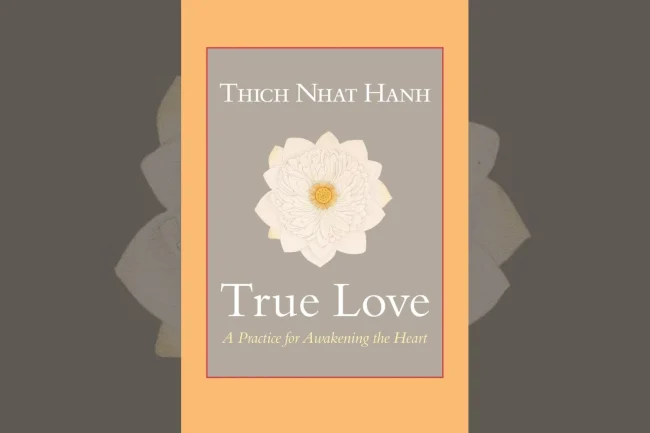
“True Love: A Practice for Awakening the Heart,” by Thich Nhat Hanh

True Love: A Practice for Awakening the Heart

Title: “True Love: A Practice for Awakening the Heart.”
Author: Thich Nhat Hanh
Publisher: Shambhala
ISBN: 1-59030-188-9

Bodhipaksa reviews a new book by Vietnamese Zen Master Thich Nhat Hanh and finds a treasure-trove of teachings on love.

Thich Nhat Hanh, the Vietnamese Zen Master, is one of the foremost Buddhist teachers in the West. He is rightly known as a preeminent teacher of mindfulness meditation, having burst into the reading public’s attention with his now-classic “The Miracle of Mindfulness.”

His style, however, is not the dry-as-bones, here-are-the-traditional-lists style that you find with many eastern teachers of mindfulness. His manner exudes warmth, friendliness, and compassion. He appreciates. He is understanding. He has a rich and creative approach to communicating spiritual practice. And it’s therefore no surprise that he has much to say about love, nor that on the whole he says it in a simple and eloquent style.

No background is given to the origin of the teachings in True Love, but they read as if they were initially delivered in the context of a retreat in the United States. The style is relaxed, informal, and often gently humorous. If you’re familiar with Thich Nhat Hanh’s speaking style you can hear his slow and accented voice as you read the words on the page.

True Love is a very practical approach to cultivating lovingkindness, but it’s a practical approach that does not skip on profundity. There’s a classic line near the start of the book where the author says, “You must love in such a way that the person you love feels free,” and in which, as is so often the case, Thich Nhat Hanh finds a fresh, original, and penetrating way of expressing an otherwise elusive truth.

You must love in such a way that the person you love feels free.

For Thich Hant Hanh, mindfulness and lovingkindness are not separate qualities. Although they may theoretically be seen as distinct, he regards mindfulness as incomplete without an infusion of metta; mindfulness is a warm, appreciative, and integrated faculty rather than a cold and objective gaze at our experience. Likewise, he sees lovingkindness as being incomplete, or rather impossible, without mindfulness: “Love Is Being There” is the title of one chapter, in which he reminds us that “the most precious gift you can give to the one you love is your true presence.”

He offers four “mantras” that we can use to help us enact love in our lives. He explains that in Buddhism a mantra is a spoken formula that, when spoken in a state of concentration, can alter a situation (a neat if unconventional definition). By extension then he regards anything said in a state of concentration to be, in effect, a mantra. And so he offers mantras such as:

  • Dear one, I am here for you
  • Dear one, I know that you are here, and it makes me very happy
  • Dear one, I know that you are suffering, that is why I am here for you
  • Dear one, I am suffering, please help.

Some of us may not be comfortable with the precise form of the wording — I can’t imagine calling my wife “dear one” — but the message in these four mantras strikes me as being a simple but powerful application of lovingkindness, empathetic joy, and compassion.

In True Love, Nhat Hanh places the cultivation of mindfulness and lovingkindness in an existential context. He reminds us that

We have a great fear inside ourselves. We are afraid of everything–of our death, of being alone, of change.

He also points out that “mindfulness helps us to touch nonfear.” We do this through transcending “the notions of being and nonbeing,” and the “notions of birth and death,” and this in turn is achieved by “looking deeply” with mindfulness.

He also puts the teaching of love in a firmly nondualistic framework:

Every time you have an energy that needs to be transformed, like jealousy or fear, do something to care for this energy, for this negative energy, if you do not want this energy to destroy you… There should be no conflict between one element of our being and another element of our being. There should only be an effort of taking care and being able to transform. So we must have a nonviolent attitude with regard to our suffering, our pain.

This nonviolent approach to transformation is rooted in love. We do not look at our destructive tendencies as things that must be destroyed (for that would be employing violence in the pursuit of nonviolence) but as confused and hurt parts of ourselves that must be befriended and understood. Love is the nonviolent conqueror, transforming through a mature and loving care, “the care given by the big brother to the little brother.”

The task of the meditator is not to chase away or to suppress the energy of anger that is there but to invite another energy that will be able to care for the anger.

The book has some peculiarities. For one thing there is a recurring theme about how quick and easy transformation is. Sometimes we’re told “three weeks are enough to transform the pain,” while other times “the result could be there, maybe, in three or four minutes.” It’s certainly good to remind people that change can happen quickly, but more often people need reassurance in dealing with the relatively slow pace of change that they experience, and in my view Nhat Hanh goes a little over the top in a way that sounds rather like salesmanship.

And Nhat Hanh has a longstanding habit of “quoting” the Buddha, when what he’s actually doing is at best paraphrasing him and at worst putting words into his mouth.

But these minor quibbles aside, this is an excellent book. There are some interesting asides that branch from the main narrative, including an amusing discussion of “telephone meditation” (including a warning not to expect the phone to be picked up immediately — or at all — when calling his retreat center in France), and a discussion in which he points out that we have a right to demand that our political leaders cultivate mindfulness and lovingkindness.

Complete beginners to meditation and Buddhism will find in True Love a systematic guide to cultivating love, mindfulness, and wisdom, and old hands will find enough freshness, inspiration, and profundity to enrich their practice for months or years to come.


Read More

Top 10 Buddhist teachers living in America

Coffee-stain ensoWaylon Lewis at the Huffington Post has compiled a list of what he considers to the the top ten teachers “you can study with,” excluding “charlatans,” “promising youngsters,” “those who you can’t really study with because they’re too famous,” or “in private meditation retreat all the time.”

1. Sakyong Mipham Rinpoche ~ he’s young but not too young, experienced, thoroughly Westernized (though exotically Tibetan, heritage-wise), a great teacher and frequently accessible at programs around the US, Europe, Canada, even South America. But because he’s a rising star, you’ve got to make an effort if you want personal training.

2. Pema Chodron ~ though Pema is a best selling, accessible, wise, safe teacher, and Oprah loves her…I nearly disqualified her because she’s no longer frequently accessible. But she’s just too good to overlook. So check out her teaching schedule, and connect with her before she retires or goes into retreat.

3. Sharon Salzberg ~ like Pema, she’s a best-selling author, beloved by Oprah, and an immediately accessible teacher to Buddhists and never-gonna-be-Buddhists alike. While less feisty than Pema, she‘s deeply experienced and warm-hearted. With her partners-in-crime Joseph Goldstein and Jack Kornfield, she teaches mostly out of the Insight Meditation Centre in Barre, Mass.

4. Ponlop Rinpoche ~ like Mipham Rinpoche and Dzigar Kongtrul Rinpoche (below), a young, well-trained teacher who belongs to the first generation of Tibetan Buddhist raised and trained in the West. He’s got an avid, small-but-fast-growing community–perfect if you want personal attention and training.

5. Joan Halifax Roshi ~ a strikingly-lovely, wise and venerable American Zen teacher, she‘s based out of her Upaya Zen Center in New Mexico, and works with the yoga community extensively. A superstar.

6. Dr. Reggie Ray ~ while he’s been caught in that “I’m American yet folks treat me like a guru vortex” that’s chewed up and spit out Osel Tendzin and Richard Baker Roshi before him, Reggie is like Pema a magnetic, accessible teacher. Unlike Pema, he’s got a small community with whom he works closely. Perfect if you want personal attention and training.

7. Columbia professor, Free Tibet activist and co-founder of The Tibet House, righthand man to the Dalai Lama, one of TIME’s most Influential People and father of Uma, Robert Thurman is charismatic, wild and wise–perfect for those who want to connect with the Dalai Lama’s teachings.

8. Norman Fischer ~ I don’t know him at all, being mostly a Tibetan Buddhist trained boy myself, but he’s got a stellar reputation for integrity.

9. Dr. Judith Simmer-Brown, Dale Asrael, Frank Berliner ~ alright, I’m cheating–combining three in one–but if you’re college-age, you can find ’em all (and other gems, too) at little Naropa University. Dr. Simmer-Brown is an expert in feminism, or the feminine principle in Buddhism, Ms. Asrael is wise and kind, Mr. Berliner is deeply serious, knowledgeable, caring, and impossibly good looking–the Marlboro man of Buddhism.

10. Dzigar Kongtrul Rinpoche ~ like Ponlop Rinpoche, if you’re looking for a small community, personal attention and deep study, he’s perfect for you. Same goes for the remarkable, crazy-wisdomish Dzongsar Khyentse Rinpoche–an artist, filmmaker and incredible teacher–who has a strong, committed community. If however, you’re looking to simply inject a little mindfulness and awake-ness and peace and sanity into your daily life, you may want to stick with the superstars listed above.

Lewis insists that the list isn’t final and invites comments.


BodhipaksaBodhipaksa is a Buddhist practitioner, writer, and teacher, and is also the founder of Wildmind. He lives in New Hampshire with his wife and daughter, and has a particular interest in teaching prison inmates.

As well as teaching behind bars, Bodhipaksa also conducts classes at Aryaloka Buddhist Center in Newmarket, New Hampshire. He muses, rants, and shares random aspects of his life on his blog at bodhipaksa.com. You can follow Bodhipaksa’s Twitter feed at https://twitter.com/bodhipaksa or join him on Facebook.


Read More

Chogyam Trungpa on Warriorship

Woman in warrior pose, in front of what appear to be orange flames

In these extracts from a forthcoming book from Shambhala Publications, the late Chogyam Trungpa defines his vision of the peaceful Buddhist warrior and explains the joys of the warrior’s path.

The warrior’s weapons

If victory is the notion of no enemy, then the whole world is a friend. That seems to be the warrior’s philosophy. The true warrior is not like somebody carrying a sword and looking behind his own shadow, in case somebody is lurking there. That is the setting-sun warrior’s point of view, which is an expression of cowardice. The true warrior always has a weapon, in any case … The definition of warriorship is fearlessness and gentleness. Those are your weapons. The genuine warrior becomes truly gentle because there is no enemy at all.

From the manuscript of CONQUERING FEAR: THE HEART OF SHAMBHALA. Forthcoming from Shambhala Publications in 2009.

* * * * *

The joy of warriorship

When we speak of fearlessness, we are describing a positive state of being full of delight and cheerfulness, with sparkling eyes and good posture. This state of being is not dependent on any external circumstance. If you can’t pay the electric bill, you might not have hot water in your house. The building you live in may not be well insulated. If you don’t have indoor plumbing, you may have to use an outhouse. Millions of people in the world live this way. If you can raise your good posture of head and shoulders, then regardless of your living situation, you will feel a sense of joy. It’s not any kind of cheap joy. It’s individual dignity. This experience of joy and unconditional healthiness is the basic virtue that comes from being what we are, right now. You have to experience this natural healthiness and goodness personally.

When you practice meditation, that brings the beginning of the beginning of this experience. Then, when you leave the meditation hall and go out and relate with the rest of reality, you will find out what kind of joy is needed and what kind of joy is expendable. The experience of joy may be a momentary experience, or it could last a long time. In any case, this joy is an eye opener. You are no longer shy of seeing the world. You find that the joy of warriorship is always needed.

From the manuscript of CONQUERING FEAR: THE HEART OF SHAMBHALA. Forthcoming from Shambhala Publications in 2009.

Read More

“Warrior King of Shambhala: Remembering Chogyam Trungpa,” by Jeremy Hayward

"Warrior King of Shambhala: Remembering Chogyam Trungpa"

Chogyam Trungpa Rinpoche was a charismatic, brilliant teacher whose drinking and sexual dalliances left a problematic legacy. Suriyavamsa reviews a new book that appreciates Trungpa’s monumental contribution to western Buddhism but doesn’t shy away from describing his shortcomings.

The Tibetan teacher Chogyam Trungpa Rinpoche stands out among the pioneers of Western Buddhism as a colorful and dangerous force making a huge impact on the Buddhism we find here today.

His short life was characterized by a tension between his thorough engagement with traditional Buddhist practice and his breaking with this traditional form in an often outrageous way. Both facets were part of his traditional Tibetan upbringing — a meticulous monastic training in Buddhist practice and theory and an inheritance of the spirit of the crazy yogi.

The encounter between his Tibetan “crazy wisdom” approach and the wild world of early seventies post-hippy America resembles the serious car crash he survived in the late sixties when he ran his powerful vehicle into, of all things, a joke shop.

We get an insight into the tenderness and depth of Hayward’s personal relationship with his teacher

Despite his notoriety — his drinking which eventually killed him, his promiscuity, the outrageous way he sometimes treated people and the acrimonious chaos, after his death, of the movement he founded — he left a formidable legacy. He trained many of today’s eminent Buddhists such as Pema Chodron, Reginald Ray, Judith Simmer Brown, Francesca Freemantle and Sherab Chodzin Kohn. Due to Trungpa there exist Shambhala Books, the Shambhala Meditation and Retreat Centers and an accredited university in Boulder, Colorado.

How many of us reading this had our interest in the Dharma kick-started with the thrills of one of his many books? Meditation in Action and Cutting Through Spiritual Materialism in particular have been an introduction to Buddhism for thousands of people.

There are now a number of books appearing that allow us a fresh re-appraisal of Trungpa. We have his wife Diana Mukpo’s Dragon Thunder and Fabrice Midal’s two works, Chogyam Trungpa, His Life and Vision and Recalling Chogyam Trungpa. All go much deeper than either sordid exposure or the fawning lama worship so often found with Western presentations of Tibetan Buddhism. Added to these is the book I am reviewing here — Jeremy Hayward’s Warrior King of Shambala, Remembering Chogyam Trungpa.

Trungpa was trying to establish the Kingdom of Shambhala, a society with traditional values of etiquette and respect

Jeremy Hayward is an Oxford trained physicist who first met Trungpa shortly after the Rinpoche arrived in the United States in 1970. Hayward writes from personal experience, giving an account of the years he spent practicing and working with Trungpa. It is good reading; you feel for him as he describes his own awkwardness and English reserve amongst the antics of Trungpa and his followers.

We get an insight into the tenderness and depth of his personal relationship with his teacher — a strong emotional bond akin to a love affair, with all the joy and pain this brings. Trungpa spoke of devotion to one’s guru as being one of longing, an unrequited love. There is valuable personal testimony here to be added to the debate around the matter of teachers, hierarchy and boundaries that has been raging in Western Buddhism over the past two decades.

Hayward writes about the struggles of managing a rapidly growing sangha as it moved from being a commune living in one house to a complex network of institutions holding seminars for up to 1,500 people and conducting courses across the US in everything from meditation and Buddhism to the social experiment of the Shambala program to flower arranging. There are tales of rivalry and resolution and of egos restrained and unrestrained. As someone involved on a humbler scale in another Buddhist institution I found valuable lessons in this shop-talk. I particularly cherish the advice given by Dilgo Khyentse Rinpoche (a teacher of both Trungpa and my own teacher, Sangharakshita) to the staff of the early Naropa Institute as it struggled with low enrollments, canceled classes and missed payrolls. His response was, “If you let the roots go deep enough, the tree will blossom abundantly.”

Trungpa’s drinking and multiple partners are described in an unsensational, matter of fact way.

Then there’s the “crazy” stuff. The book contains pictures of men in suits marching with flags, Trungpa in military uniform looking like a banana republic dictator on horseback and with uniformed bodyguards, and holding court on a throne in tails and sash and with his wife in a ball-gown, both bedecked with insignia. Senior members of the sangha were made sirs, lords and ladies and formal dinners were laid on with detailed rules of how to hold a fork. Trungpa was trying to establish the Kingdom of Shambhala, a society with traditional values of etiquette and respect for oneself, others and the natural world and a way of life leading to egoless behavior; the result appears a little bizarre.

Hayward points to something completely “other” in Trungpa’s behavior. He meets with Nova Scotia’s agricultural department officials, holds an informed and detailed discussion on farming methods and impresses the experts; yet all the time he is wearing an admiral’s uniform, having been introduced as a Prince of Tibet, a country with no coastline. Hayward also tells of Trungpa’s ability to see and describe ghosts and other denizens of a world beyond the sight of most of us, and also his ability to really see the people he met, time and time again penetrating to the deeper situation of the person and responding with just what was required.

Hayward invokes the challenge, the danger and complexity of living with Trungpa and his vision

Trungpa’s drinking and multiple partners are described in an unsensational, matter of fact way. All the same I couldn’t square the ideals these people were establishing with this man at the center of it all, killing himself with alcohol. People are complex.

The strangest part of the book is Hayward’s time as an “attaché” caring for Trungpa on a retreat he termed “Fortress Free From Concept.” This was solitary apart from an entourage of attendants and consorts, and as it progressed Trungpa’s behavior became increasingly bizarre, free of convention if not concepts. He would be awake for days on end, not want to begin a meal until Shantarakshita (an 8th century teacher) turned up, battle an unseen green woman sent by some anti-dharmic lama and go on “journeys” back to India and England where his attendants had to act as if they were in Bengal or London. All this time Hayward was being constantly stretched mentally and physically and yet when Trungpa slept… “Then my mind could rest in a brilliant space that was extremely peaceful… The whole atmosphere of the house seemed to be filled with luminous warmth and peaceful radiation.”

Most importantly, this book gives us a window into what Chogyam Trungpa Rinpoche was trying to do and how he went about doing it. He attempted a more radical reappraisal of the Dharma for the West than almost all other teachers before or since, whether Asian or Western born. He was trying to create a Buddhist practice for Western culture unencumbered by the historical and cultural adornments of Tibetan Buddhism without betraying the profundity and authenticity of the Dharma he was taught. He was also attempting to build the sane society he had read of in Erich Fromm’s book of that title in the form of his Kingdom of Shambhala. By doing so he was stressing the importance of thinking in a cultural and social perspective bigger than one’s own isolated experience. It is too early yet to know if he succeeded — that will take a century or two!

This book and those by Diane Mukpo and Fabrice Midal help counter Trungpa’s message being simplified and reduced to a comfortable therapy or palliative consumable. Trungpa strongly argued against this acquisitive approach to the Dharma in his Cutting Through Spiritual Materialism. Hayward invokes the challenge, the danger and complexity of living with Trungpa and his vision in a detailed and personal way and in that he is to be congratulated.

Warrior King of Shambala: Remembering Chogyam Trungpa
by Jeremy Hayward
Wisdom Publications
ISBN 0-86171-546-2

Read More

Ravenna Michalsen: Jumpstarting Buddhist music in America

Ravenna Michalsen Dharmasong

Ravenna Michalsen is a Dharma songstress with ambitions to start an “American Buddhist music movement.” Her second CD of Buddhist-inspired songs, appropriately named Dharmasong, has just been released. We talked to Ravenna about her message, her music, and the challenge of remaining egoless in the spotlight.

Also see Sunada’s review of Dharmasong.

***

Wildmind: You’ve said that you want to “jumpstart the American Buddhist music movement.” That sounds very ambitious!

Ravenna: Yes! America has such a long, diverse, and wonderful musical tradition. Our society is very music-oriented. It is very hard to go anywhere without hearing music, which is one of the reasons retreat centers can feel so peaceful. Much of the constant music in our world can be mentally tiring, chock full of thoughts, emotions, and conceptual chitter-chatter.

Dharma-inspired music can both play into our society’s deep love and obsession with music and shift its aural orientation from something often deeply klesha-based* to something less harmful. Both “Dharmasong” and “Bloom,” my first album, are devotional albums that feature songs about various figures from ancient Indian and Tibetan Buddhism. My hope is that these songs turn the listener’s mind toward the teachings of the Buddha, which is essentially anything that holds us back from unskillful action.

(*Editor’s Note: Kleshas are negative mental states that cloud the mind’s nature and manifest in various forms as unskillful actions of body, speech, and mind.)

W: So how would you define the “American Buddhist music movement”?

R: Hm, well, that is a bit complicated. I like the term “American Buddhist” because I find it a bit more culturally accurate than “Tibetan Buddhist” or “Burmese Buddhist,” etc., if the practitioner is actually an American…

So, while traditional Buddhist cultures all have their own musical traditions, which then have informed their Buddhist musical traditions, the United States doesn’t quite quite have that yet. People tend to assume that because I write Buddhist-inspired music, my music must sound “eastern” or something. I would like to change that assumption! I would like people to be comfortable owning the fact that the United States at this point has a deep and wonderful Buddhist tradition and that thus Buddhist-inspired music written here in the west has permission to sound “American”! Does that make sense?

W: It makes perfect sense. When I listen to Alison Krauss singing “Down to the River to Pray” I find myself yearning for Buddhist spirituals!

R: Completely. When I listen to Aretha Franklin sing “A Change Is Gonna Come,” I feel the exact same way!

W: So, with apologies for the clichéd question, what would you say are the main influences on your music?

R: Well, I love love love to listen to Aretha Franklin, Joan Baez, Mariah Carey, Mirah, Amy Winehouse — all singers who really put so much heart into their singing. But I don’t really sound like any of them, sadly! People often say I sound a bit Celtic, but that is totally unintentional. It’s a hard question to answer! I listen to a lot of music, but I can’t really say I try to sound like anyone.

W: What got you started in Dharma practice?

R: Well, through my mom who did some searching herself and finally stumbled upon Trungpa Rinpoche and Pema Chodron and so she introduced me to them as well…

W: I guess I was meaning something more like what was your personal motivation in taking up Dharma practice.

R: I guess feeling sad and wanting to explore my mind. Meditation and the Dharma can feel really good when you do a bunch of it — I got into it, really into the whole thing, on retreat, so right away I associated feeling good with practicing a lot. After that first month retreat that faded though — of course! Since then it’s been much more up and down, cycles of “good” and cycles of “not-so-good” practice.

It makes me feel more aware of being alive, more in touch with reality I guess. But it was sadness that really brought me to practice, rather than casual interest.

W: And when did you start consciously bringing together your music and your practice?

R: I was on a retreat in 2002 with Sakyong Mipham Rinpoche (of the Shambhala community) and he heard me sing a song called “The Contemplation Song” (originally by Milarepa, but adapted and set to music by Winfield Clark). The next day his editor brought me a poem-like song that Rinpoche had written for me to set to music, so I did that and sang it and then she brought another and I sang that and thus the idea was planted.

I went home and started writing little songs about Dharma – some kind of hybrid between the kind of music I was doing before and what I do now. But slowly I started to really consciously write Dharmic songs, usually before or after a practice session. It wasn’t until I went in to record “Bloom” that I had to truly think about the combination of whatever kind of music I write with these dharma-inspired topics.

W: Were you already performing at that time and if so what was your music like?

R: Yes, well, I started playing classical cello when I was eight and so was performing classical music — solo, orchestra, chamber — until I was 21, when I developed arthritis. When I was a sophomore in college I started playing with an indie rock band (cello) and starting writing music with them – just cello parts at first, then little messy songs, then more fully formed ones. I just went and found some of those older songs actually! They are kind of sweet poppy sad songs — fun to sing and play.

W: At least two of the songs on your new CD deal with what might be termed “feminist” issues. “Marpa” evokes the question of where are the female gurus in Tibetan history, and “A-Dron” celebrates the female lineage-holder Machig Labdron. To what extent do you see a feminist perspective as being central to your artistic work?

R: Completely central in that I am a feminist! I believe that the essential nature of both women and men is Buddhanature and that both genders have equal ability to achieve complete perfect enlightenment. However, due to historical prejudices female practitioners have been devalued and left out of the historical Buddhist cannon — which is in part why I try to include them in my songs. I also include them because I personally find their lives and stories so utterly compelling, remarkable and inspirational.

W: You’ve said that Tsultrim Allione, the author of Women of Wisdom and founder of the retreat center Tara Mandala, encouraged you to record your first CD, Bloom. Has she been a source of encouragement in helping to highlight the discrimination women teachers have faced in the past?

R: Her “Women of Wisdom” is a remarkable work in that it introduces the life stories of various great female practitioners and teachers from Tibetan Buddhism. These are stories that are largely unknown and Tsultrim did a great service bringing these stories to a wider audience. She is a very spacious person who is not particularly saddled by the idea of gender, but recognizes that others are and that that has affected the treatment of women over history.

W: So apart from wanting to promote an awareness of feminist issues in relation to practice, are there other contemporary issues that you try to bring into your work?

R: Hm, I don’t think so. I do want the music to make people think a bit, but I also want them people to have something peaceful to listen to.

W: You mentioned earlier something about modern music being klesha-based and mentally tiring. Could you say more about that problem and how your music seeks to be different?

R: I think music — like anything — can often be very klesha-based and in the end that can really tire you out. It can be fun and exhilarating for a bit, particularly as you identify with whatever passion, aggression, etc., comes up in the song. But stepping back a bit, identifying with the thoughts or emotions generally leads us to believe them and then act based on those thoughts and emotions, rather than seeing the thoughts and emotions as just arising and passing away at their own rate. Believing our thoughts tends to lead to believing more of our thoughts and having our actions based upon those beliefs — and that generally leads to lots of samsara!

I definitely aspire to have my music be a bit different – but of course it isn’t! Maybe the subject matter is different — not so overtly packed with klesha — but in the end it depends on the mind that listens to it.

W: What does the rest of your practice look like — the stuff that isn’t directly connected with music?

R: I try to go on retreat a few times a year and practice daily in some form, not always the same practice — I tend to do the practice that fits what is going on in my life. Right now I am co-teaching a class at the New Haven Shambhala Center called “Taming the Mind,” which is a great way to verbalize what my practice has brought up for me.

W: Performing can be a very ego-based thing, being literally in the spotlight and having everyone paying attention to you. Is that something you’ve had to work with as part of your practice?

R: Excellent question. This is an issue that I have had to work with pretty much constantly, and it is rich! When I actually sing, it is not really a problem, because I am concentrating on the object of singing. But it comes up more when people come to a concert and then don’t donate or the center is (as it seems to me) stingy with paying or sharing donations. Then I get a real flare of both ego and the sort of ego-based, but also reasonable, question of why people think that art should just be free. That it is OK to listen for an hour and walk away without offering anything by way of support or to burn CDs without thinking about how that artist lives — actually lives: buys gas, groceries, rent, clothes, etc. I don’t charge a fee to sing and very much struggle with whether I should, and somewhere in there is a mix of ego, figuring out how to survive financially and self-worth.

I am very shy in some ways, so hanging out after shows hearing praise and such makes me uncomfortable. But I do like (and even crave) people to be quiet and appear to really listen when I sing. It’s a great profession to be in if you want to be reminded of all your edges!!

W: What are you working on at the moment? Are you working on new material, or are you still caught up in promoting the new CD?

R: Not yet! Dharmasong, in the scheme of things, only just came out! So I will be plugging it for a while! I spend a lot of time arranging concerts — so if there is a center/group out there looking for a concert of dharma music, email away!

But then again, I am always sort of writing – but not in a concentrated way, just letting things come up.

W: Thanks very much, Ravenna. It’s been good talking to you.

R: Thanks so much. It’s been enjoyable.

Read More

Waking up in sobriety, by Kobai Scott Whitney

Kobai Scott WhitneyThere is in the Buddha’s early teachings a concept very much like the 12-Step ideal of true sobriety. It’s called, in Pali, appamāda. In fact, this is the title of the second chapter of the Dhammapada. Like most modern scholars writing in English, Gil Fronsdal translates appamāda as “vigilance.” In the commentary to his translation (Shambhala 2006), he elaborates, saying that it could also be translated as “diligence, heedfulness, watchfulness.” And he adds his own gloss, which is “energetic mindfulness.”

And this, to me, is what it takes to stay sober over the long term. Not just light and airy mindfulness, but a very serious commitment to always watching the body/heart/mind. For those of us who are addicts, this staying sober thing is serious business. So that’s why we need our mindfulness to have some energy behind it.

Traditionally the 12-Step programs have always made a distinction between mere abstinence and a deeper, more meaningful kind of sobriety. Just not using is sometimes called “white-knuckling it,” and it’s a miserable way to go. To be happy in sobriety one must be willing to actively work on restoring health, sanity, ethical behavior and, dare I use the word, joy.

I have known several people in my life that stopped drinking or using on their own. Things weren’t as messy, of course, since finances, relationships and other things were not as chaotic, but these people were clearly not happy campers; clearly not restored to gratitude or to love of life by their abstinence. I am not, by the way, saying that the 12-Step programs are absolutely necessary either, they just make things much easier for people who don’t know the territory of living without addiction. For those who can get over all the tired and not-true clichés about AA or NA, the programs offer a low-cost, always-available method of support through the first difficult months and years of living without using.

I see recovery from addiction very much like the Buddhist undertaking of recovery from suffering. Both projects require that we take on a whole new dimension of commitment, as well as engage in step-by-step work on ourselves. Both have 12 steps. In the case of Buddhism, this is the Four Ennobling Truths plus the Eightfold Map of the Path.

And both processes can be described as a recovery from ego.

When we are using, when we are inside the world of our intoxication from alcohol, drugs, food, sex, shopping, gambling, video games–whatever particular enchantment has become our thing–we are really playing God. We are saying to ourselves, I am the center of the universe and I will control my own mind and my own feelings myself. I’m in charge. I AM THE MASTER OF THE UNIVERSE!

In the Gospel of Thomas, Jesus says, “I took my stand in the midst of the world, and in flesh I appeared to them. I found them all drunk and I found none of them thirsty.” (Meyer, The Unknown Sayings of Jesus, p.9) Like Gotama Buddha, Jesus of Nazareth saw people as intoxicated with the things of this world, missing what is real. The Buddha called this “enchantment,” meaning we are under the spell of our distractions. This is why he describes the wise person as “disenchanted.” He did not mean, as we use the word today, that we are disappointed. He means quite literally that we have come out of our trance, that our practice has de-hypnotized us.

So the first step in recovery is to realize, experience and admit that I cannot manage my own life. Just as in the beginning of our Buddhist practice we must experience the First Truth which is that–no matter what I do or don’t do–there is suffering.

So our meditation and mindfulness practice–or our practice of Step 11 (“We sought through prayer and meditation to improve our conscious contact with God as we understood him. [sic])–are designed to keep us awake, to keep us from slipping back into our drug-addled sleep. Vigilance is a commitment to life: negligence is a vote for the kingdom of death.

The Dhammapada:

Vigilant among the negligent,
Wide awake among the sleeping,
The wise one advances
Like a swift horse leaving a weak one behind.

With vigilance, Indra became the greatest of the gods.
The gods praise vigilance,
Forever rejecting negligence.

The monastic who delights in vigilance
And fears negligence
Advances like a fire,
Burning fetters subtle and gross.

To describe the effects of this committed watchfulness, the Dhammapada sets up a pairing of opposites, like vigilance versus negligence. And I must say there is nothing more negligent than an addict in the full practice of his or her trade. Family and friends are neglected, finances are neglected–even one’s home, clothing and appearance get neglected.

This is probably why we refer to early sobriety as “cleaning up.”

So part of our recovery involves doing simple things like the laundry, paying bills, going to the beauty salon or the barber. And our practice becomes taking care of ourselves as if we were worth it, as if we were ordinary members of society, with no claim on uniqueness. This is in stark contrast to that special person we were before: that person who didn’t have to obey any rules, that person who was so special we could do whatever we wanted to–even if it was against the law, or against plain human decency.

Bill W., one of the co-founders of AA, writes: “In A.A. we aim not only for sobriety–we try again to become citizens of the world that we rejected, and that once rejected us.” (As Bill Sees It, p.21)

I recently saw the movie “Harry Potter and the Order of the Phoenix,” in which a new and evil administration has taken over Hogwarts Academy. Gradually much of the academy comes under the spell of a new administration, which is systematically eroding the rights and the free speech of both students and faculty. (Might this be a metaphor for something?)

Some people compromise. Some people slip away. But of course, brave Harry and his fellow travelers must fight. And so the story becomes the tale of a small, committed group of people who refuse to fall asleep, who refuse to be enchanted. So that’s what we’re up to also. If you want a fantasy to while away your time on the cushion, this is it!

Without our watchfulness, the other world always awaits. Buddhism has its own analogy for the kingdom of in-satiety. It’s the hungry ghost, with its huge belly and tiny mouth–always hungry, but never full; always eating, but never nourished.

And this is where we live. We are a culture of hungry ghosts–always shopping, but never having enough; roaming the buffet lines, but feeling like we’re starving, even as our bodies get bigger and bigger. It takes energy and mindfulness not to go to sleep again, but that’s our job. It’s time for the muggles to revolt

Read More

Authorized list of Buddhist books for prisons is short on numbers, high on repetition, and contains non-Buddhist titles

news
3 Comments

shadow of prison bars

The New York Times has, from a contact in prison, managed to get hold of the lists of 150 government-approved titles for the various religious traditions.

The news for Buddhist inmates is bad. The list supplied by the NYT (PDF) lacks any serious scriptural works such as the Dhammapada, does not even come close to the touted 150 titles, contains many repeated titles, and even contains a few non-Buddhist works!

One thing to be noted is that the various Christian denominations each have their own list of titles, while all the Buddhist traditions have been lumped together. Thus there are lists for Catholics, Jehovah’s Witnesses, Mormons, Messianic traditions, Orthodox Christianity, and Protestants, and yet Theravadin Buddhism, Zen, Ch’an, the various schools of Tibetan Buddhism, Pure Land, Shingon, and Nichiren Buddhism are all treated as one tradition. The same is true of other non-Christian traditions such as Islam, where Sunni and Shia Islam are treated as one religion. It’s clear then that Christianity is being favored above other religions.

All of the texts are in English, despite many of the inmates in prison in the US being Vietnamese.

There are no texts from my own tradition, the Triratna Buddhist Community.

The Buddhist list (see below) has a number of peculiarities. There seem to be in fact only 94 titles on the list, of which 68 are books, the remaining titles being audiovisual media. It’s unclear what has become of the rest of the 150 titles. The Protestant list alone features no fewer than 213 print titles!

Another peculiarity is the repetition on the list. Shunryu Suzuki’s classic, “Zen Mind, Beginner’s Mind” appears at least three times (and that’s out of only 60 books!). “Dzogchen Teachings,” by Chogyal Norbu is repeated. The list appears to have been put together in great haste. Many of the authors’ names are mis-spelled, with “Pena Chodron” instead of “Pema Chodron” for example. Her “The Places That Scare You” is featured twice.

At least three of the books (“JivanMuktiviveka,” by Swami Vidyaranya, “Crest Jewel of Discrimination,” by Sri Shankasa, and “Talks With Ramana Maharshi”) are Hindu rather than Buddhist texts, and another, “Opening the Door to Bon,” is about a non-Buddhist Tibetan tradition. “The Journey To The Sacred Garden,” by Hank Wesselman is a text on Shamanism.

Yet another peculiarity is the absence of canonical texts. It’s unclear whether these are given a pass, so to speak, and don’t have to go through a selection process. The absence of the Bible from the Catholic list would seem to indicate that this might be the case.

The numbering is erratic, and runs from 1 to 33, then 13 to 29, then 43 to 60.

The NYT notes that the lists are not dated and that there’s no no way of knowing whether they are still current. Our examination of hidden data on the document, however, reveals a date of 3/22/07 — many months before the policy of censoring religious books was announced. There’s no indication of who prepared the list. We can only hope that this is a rough draft.

Wildmind is still waiting for an official response to our Freedom of Information Act request for an official copy of the list.

Here are the 60 print titles from the NYT’s document:

1) Buddhist Religions: A Historical Introduction, by Richard H. Robinson, Willard L. Johnson, Thanissaro Bhikkhu, Wadsworth Publishing, ISBN: 0534558585, 2004 (5 ed.)th An introductory book to Buddhism that covers the teachings and practices of a wide range of schools and traditions.

2) The Story of Buddhism: A Concise Guide to its History & Teachings, by Donald S. Lopez Jr., HarperSanFrancisco, ISBN: 0060099275, 2002 A book that contains information on the practices of a wide range of schools and
traditions.

3) The Teaching of Buddha, compiled by the Bukkyo Dendo Kyokai (Buddhist Promoting Foundation), ISBN: 4-89237-011-8, 1985 (110 ed.)th Provides selective passages from many Buddhist scripture. This book is found in hotels,
and institutions.

4) Essential Buddhism: A Complete Guide to Beliefs and Practices, by Jack Maguire, Pocket Books, ISBN: 0-671-04188-6, 2001 Provides a practical summary of the different schools and practices of Buddhism.

5) Buddhism Plain and Simple, by Steve Hagen, Broadway Books, ISBN: 0767903323, 1998 This book explains basic Buddhist teachings from the Zen Buddhist perspective.

6) Peace Is Every Step: The Path of Mindfulness in Everyday Life, by Thich Nhat Hanh, Bantam Books, ISBN: 0553351397, 1992 This book applies the basic Zen Buddhist teaching of mindfulness to everyday living.

7) The Heart of the Buddha’s Teachings: Transforming Suffering into Peace, Joy, and Liberation, by Thich Nhat Hanh, Random House, Inc., ISBN: 0676903692, 1999 This book applies the basics teachings of Buddhism to modern struggles from a Zen Buddhist perspective.

8) Taming the Tiger Within: Meditations on Transforming Difficult Emotions, by Thich Nhat Hanh, Penguin Group, ISBN: 1573222887, 2004 This book guides the reader through Buddhist ways of dealing with emotions such as anger, fear, and jealousy.

9) Zen Mind, Beginner’s Mind: Informal Talks on Zen Meditation and Practice, by Shunryu Suzuki, Shambhala Publications, Inc., ISBN: 0834800799, 1973 This book is often considered as one of the classic explanations of Zen Buddhism to
Western audiences.

10) Not Always So: Practicing the True Spirit of Zen, by Shunryu Suzuki, Edward Espe Brown, HarperCollins Publishers, ISBN: 0060957549, 2003 A follow-up book to the above listed Zen Mind, Beginner’s Mind.

11) Everyday Zen: Love and Work, by Charlotte Joko Beck, HarperCollins Publishers, ISBN: 0060607343, 1989
This book applies the basics of Zen Buddhism to the struggles of everyday life.

12) Woman of the Way: Discovering 2,500 Years of Buddhist Wisdom, by Sallie Tisdale, HarperCollins, ISBN: 0-06-059816-6, 2006 This books traces women Buddhist masters and teachers, and gives us an understanding
of women’s contribution to Buddhism.

13) Living Buddha, Living Christ, by Thich Nhat Hanh, Riverhead Books, ISBN: 1-57322-568-1, 1995 This book compares Buddhist and Christian themes and scripture.

14) The Art of Happiness: A Handbook for Living, by the Dalai Lama, Howard C. Cutler, Penguin Group, ISBN: 1573221112, 1998
A book that applies basic Buddhist teachings as explained by the Dalai Lama to modern daily struggles.

15) Open Heart: Practicing Compassion in Everyday Life, by Dalai Lama, Nicholas Vreeland, Little, Brown & Company, ISBN: 0316930938, 2002
This book lays out a path of Buddhist practice to increase one’s compassion.

16) Awakening the Buddha Within, by Lama Surya Das, Bantam Doubleday Dell Publishing Group, ISBN: 0767901576, 1998
This book explains basic Buddhist teachings and practices from the Tibetan Buddhist perspective.

17) When Things Fall Apart: Heart Advice for Difficult Times, by Pema Chodron, Shambhala Publications, Inc., ISBN: 1570623449, 1997
This book explains how one can face the struggles of modern life through the Buddhist teachings. The author is from the Tibetan Buddhist tradition.

18) The Places that Scare You: A Guide to Fearlessness in Difficult Times, Pema Chodron, Shamabala Publications, ISBN: 978-1590304495. 2001

19) Buddhism for Beginners, by Thubten Chodron, Snow Lion Publications, Inc., ISBN: 1559391537, 2001
This book explains the basic teachings of Buddhism from a Tibetan Buddhist perspective.

20) Wake Up To Your Life, by Ken McLeod, HarperCollins, ISBN: 0-06-251681-7, 2002
This books provides models for developing meditation and insight.

21) What the Buddha Taught, by Walpola Rahula, Grove Press, ISBN: 0802130313, 1974
(Revised ed.)
A book that covers the basic Buddhist teachings from the viewpoint of the Theravada school. The Theravada school is practiced in South and Southeast Asian countries such as Thailand, Burma, and Sri Lanka. In the West, a type of Buddhist meditation called Vipassana meditation is popular and Vipassana meditation comes from the Theravada school.

22) A Path with Heart: A Guide Through the Perils and Promised of Spiritual Life, by Jack Kornfield, Bantam Books, ISBN: 0553372114, 1993
This book explains the practice of Buddhist meditation in an American context. The author has studied Theravada Buddhism and Vipassana meditation.

23) Lovingkindness: The Revolutionary Art of Happiness, by Sharon Salzberg, Jon Kabat-Zinn, Shambhala Publications, Inc., ISBN: 157062903X, 2002
This book applies Vipassana meditation to the struggles of modern life in America.

24) It’s Easier Than You Think: The Buddhist Way to Happiness, by Sylvia Boorstein, Harper San Francisco, ISBN: 0062512943, 1997
The book covers the basic Buddhist teachings in the context of modern American life. The author is a known teacher of Vipassana meditation.

25) Everyday Suchness: Buddhist Essays on Everyday Living, by Gyomay M. Kubose, Dharma House, ISBN: 0964299208, 2004
A book that covers basic Buddhist teachings with daily experiences. The author is from a Japanese Buddhist tradition.

26) The Buddha in Your Mirror: Practical Buddhism and the Search for Self, by Woody Hochswender, Greg Martin, Ted Morino, Middleway Press, ISBN: 0967469783, 2001
This book covers the teachings of Nichiren Shoshu Buddhism, a type of Japanese Buddhism that has some popularity in the US.

27) River of Fire, River of Water: An Introduction to the Pure Land Tradition of Shin Buddhism, by Taitetsu Unno, Doubleday Publishing, ISBN: 0385485115, 1998
This book is an introduction to Shin Buddhism, a popular form of Buddhism in Japan that is quite popular in the US.

28) First Buddhist Women: Poems and Stories of Awakening, by Susan Murcott, Parallax Press, ISBN: 1-888375-54-X, (2006)
This book provides historical insight into how Buddhism became one of the first religions to welcome women.

29) Mindfulness in Plain English by H. Gunaratana, by Corporate Body of the Buddha, ISBN: 0861713214,
Fundamentals of the basic Buddhist meditation are outlined to include: the how why, when, where and answers to problems common to implementing the discipline of meditation.

30) Mindfulness: Path to the Deathless by Ajahn Sumedgo, Corporate Body of the Buddha, ISBN: 1870205014, (!987).
Reference handbook to Buddhist meditation.

31) Zen Mind, Beginner’s Mind by Suzuki, Shunryum ISBN: 0834800799, Weatherhill, Inc. ISBN: 1590302672 (2000).
Succinct introduction to Zen practice as it discusses posture and breathing in meditation as well as selflessness, emptiness and mindfulness.

32) Describing the Indescribable by Hsing Yun, ISBN: 086171866, Wisdom Publications (2001).
Buddhist commentary on the importance of balanced insight and emotion in the spiritual path.

33) Only Don’t Know by Seung Sahn, ISBN: 1570624321, Shambhala Publication (1999).
Letters written by a Zen Master answering questions about work, relationships, and suffering.

13) The Myth of Freedom , by Chogyan Trungpa, Publisher :Shambhala (1976) ISBN:1-57062-933-1
Shows how our attitudes, preconceptions, and even or spiritual practices can become chains that bind us to repetitive patterns of frustration and despair.

14) The Wings to Awakening, by Thanissaso Bhikkhu, Publisher :The Dhama Dana Publication Fund (1996) ISBN: N/A
Details the disciplines, teachings and practices of Hinayana Buddhism.

15) Insight Meditation, by Joseph Goldstain, Publisher: Shambhala (2003) ISBN: 1-59030-016-5
Explains favorite Dharma Stories, key teachings and answers the most asked insight meditation.

16) Jivan Muktiviveka, by Swami Vidyaranya, Publisher: Wedanta Press (1996) ISBN: 81-7505-882-5
Deals with how the spiritual aspirant can overcome fear, addiction, and illusion and become the jivanmukta or liberated soul.

18) Working With Anger, by Thubten Chodron, Publisher: Snow Lion (2001) ISBN: 1-55939-163-4
This book presents a variety of Buddhist methods for subduing and preventing anger.

19) Talks With Ramana Maharshi, by Ramana Maharshi, Publisher: Inner Directions (2000) ISBN: 1-878019-00-7
This book is in question/answer format and deals with a universal approach by directly pointing to the truth of our intrinsic nature .

20) The Journey To The Sacred Garden, by Hank Wesselman, Publisher: Hay House (2003) ISBN: 1-4019-0111-5
This book shows us how we can tap into peace that lies within us all the time.

29) Fundamental Wisdom of the Middle Way, by Jay L. Garfield Publisher: Oxford (1995)
ISNB: 0-19-509336-4
A clear and eminently readable translation of Nagarjuna’s seminal work. Nagarjuna was a prominent Buddhist Saint.

43) Teachings from the Mani Retreat, by Lama Zopa Rinpoche, Publisher: Lama Yeshe Wisdom Archive (2001) ISBN: 1-891868-10-1
A day by day account of the teachings given by the Lama at the inaugural Mani Retreat including the rituals, meditation, mantra and chanting etc…

44) Zen Mind, Beginners Mind, by Shunryu Suzuki, Publisher: Weatherhill (1970)
ISBN: 0-8348-0079-9
How to practice Zen as a workable discipline and religion in one’s dally life,

45) Opening the Door to Bon, by Nyima Dallpa, Publisher, Snow Lion (2005) (ISBN: 101-55939-246-0)
A complete handbook for the fundamental practices of the Ancient Bon Tradition of Tibet.

46) Dzogchen Teachings,by Chogyal Norbu, Publisher, Snow Lion (2006) ISBN :10-1-55939-243
A complete guide to the Dzogchen teachings of Tibet.

47) Dzogchen Teachings,by Chogyal Norbu, Publisher, Snow Lion (2006) ISBN: 10-1-55939-243
A complete guide to the Dzogchen teachings of Tibet.

48) The Miracle of Mindfulness, by Thich Nhat Hanh, published by Beacon Press (1975) (ISBN: 0-8070-1239-4).
Anecdotes and practical exercises as a means of learning the skills of mindfulness being awake and ware.

49) Seeking the Heart of Wisdom, by Joseph Goldstein, Publisher :Shambhala (1987) (ISBN: 1-57062-805-X)
Teachings & practices of insight meditation which are the understanding of our bodies, minds, lives, and to see clearly the true nature of experience.

50) The Torch of Certainty , by Jamgon Kangtrul ; Publisher :Shambhala (2000) (ISBN: 1-
57062-713-4)
This text describes the Four Foundation Practices that all practitioners of vajrayana Buddhism must complete.

51) Enlightened Courage, by Dilgo Khyentse; Publisher :Snow Lion (1993) (ISBN:1-55939-023-9)
The author presents the Seven Point Mind Training, brought to Tibet by the Indian Master Atisha, which is the very core of the entire practice of Tibetan Buddhism.

52) Living at the Source, by Swami Vivekananda; Publisher :Shambhala (1993) (ISBN: 1-57062-616-2)
Writing and talks of Swami Vivekandanda on the concerns of contemporary men and women who seek to live a spiritual life in the midst of everyday activities.

53) Make Your Mind an Ocean, by Lana Yeshe; Publisher :TDL Publications (1999)
(ISBN:1-891868-03-9)
Gives helpful tips to calm our mind according to the Buddhist tradition.

54) Zen Flesh, Zen Bones, by Paul Reps Publisher :Tuttle Publishing (1998) ISBN: 0-8048-
3186-6
Four books in one and are the main Zen writing of Zen Buddhism.

55) Between Heaven and Earth, by Shi Bo, Publisher: ISBN: 1-59030-050-5
Calligraphic characters and historical and legendary anecdotes to gives a fascinating overview of the evolution of seven seminal Chinese writing styles.

56) Seared Calligraphy of the East, by John Stevens, Publisher :Shambhala (1981) ISBN: 1-57062-122-5
Covers topics as the history and spirit of Eastern Calligraphy, the are of copying religious texts, the biographies of important Zen Calligraphies.

57) The Places That Scare You, by Pena Chodron, ISBN: 1-57062-921-8, published by Shanbhala, (2001).
Teaches how to awaken our basic goodness and connect with others, to accept ourselves and other complete with faults and imperfections.

58) When Things Fall Apart, by Pena Chodran, ISBN: 1-57062-969-2, published by Shambhala, (1997).
Provides sound, heart advice for dealing with difficult times.

59) Crest Jewel of Discrimination, by Sri Shankasa, ISBN: 0-88748-034-5, published by Vedanta Press, (1947).
Sharkara shares his philosophy on the nature of reality, and how to live a righteous life.

60) The Buddha and his Teachings, by Samuel Bercholz Publisher: Shamblala (1993) ISBN: 1-57062-960-9
A collection of classic and modern Buddhist texts that provide insight into the teaching and practice of Buddhism.

Read More
Menu

Wildmind is a Community-Supported Meditation Initiative. Explore the benefits of becoming a supporter.

Close Welcome Bar