Thich Nhat Hanh

I was wrong about Trafalgar Square’s meditation flashmob

Naseem Khan, the Guardian: I’ve never been too drawn by flashmobs.

If people chose to gather clandestinely and suddenly burst out into song en masse or into a dance routine, it seems harmless enough. Maybe a burst of a surprise activity in a public place is a good thing, momentarily shaking people’s assumptions of what is normal, and maybe raising their spirits.

But the idea of a flashmob of people meditating? In Trafalgar Square? I didn’t care for the idea. It seemed to either present meditation as a display of the weird and wonderful, or be making an ostentatiously pious comment about the dehumanisation of urban contemporary life.

Weirdness or smugness, why go for it?

Read the original article »

Read More

“You are Here” by Thich Nhat Hanh

"You are Here" by Thich Nhat Hanh

“Happiness is possible,” Thich Nhat Hanh reassuringly begins the three-CD audiobook You Are Here: Discovering the Magic of the Present Moment.

I arrive back from two months in India and twenty days of Vipassana insight meditation retreat, where I was practicing mindfulness, and waiting for me on my doorstep is a copy of Thich Nhat Hanh’s You Are Here. 

It promises to offer simple and effective practices for cultivating mindfulness. Perfect, I think to myself as I try to maintain the few remaining grains of equanimity I had cultivated back in India. 

Title: You Are Here
Author: Thich Nhat Hanh
Read by: Lloyd James
Publisher: Shambhala
ISBN: 978-1-59030-727-4
Available from: Amazon.co.uk, and Amazon.com.

Thich Nhat Hanh is a Vietnamese Zen Buddhist Monk and internationally known author, poet, scholar and peace activist. He was nominated for the Nobel Peace Prize by Martin Luther King, Jr. 

“Don’t wait to start living, live now. It’s now or never”. 

You Are Here offers guidance on healing emotional pain and manifesting real love and compassion in our relationships with others. 

Thich Nhat Hanh advises “Do not fight against pain, embrace with tenderness.”

This is a wonderful teaching, but it’s so easy to forget when you are caught up in a negative emotion, it can overwhelm and all you want to do is run away from it and make it go away, but of course if I’m serious pursuing the spiritual path I cannot run or suppress, I must get deeply in touch with the existence of pain and suffering in order to cultivate compassion – without compassion, there is no happiness or true love.

I had first hand experience of this on my recent trip to India. I felt deeply unhappy. I had arrived in Delhi alone; my relationship had just come to an abrupt end just a few days earlier. I was confused, empty, slightly relieved with tinges of excitement – I had a two month adventure ahead of me, but I couldn’t have been further away from peace and equanimity.

I headed down to Bodhgaya to embark on the first vipassana retreat in a Thai Monastery. I waited and watched negative emotions pass and sometimes be replaced with more negative emotions but sometimes they would be replaced with joy, peace and equanimity! Thich Nhat Hanh mentions that joy and pleasure should also be part of our meditation.

I also more recently weathered another emotional storm when I returned. I was sitting with feelings of rejection, hurt and humiliation. I had been feeling like I had hit a roundabout on the path – and couldn’t find the right exit. I was facing the same obstacles again and again. I sat with anger, pain, regret and jealously. l didn’t want to be alive, but of course on the other side was the insight or “flowers” as Thich Nhat Hanh refers to. He suggests that you talk to depression and anger as you would a child, with no discrimination or dualism.

 “You Are Here” explores the Dharma whilst furnishing the listener with relevant practice “tips” for both beginners and more experienced practitioners.

Thich Nhat Hanh reminds us “Just breathe. You are here, body and mind. Breathe light into the lamp of awareness”

With this lamp of awareness shining I know the relationship couldn’t have been sustainable as it was. We weren’t acting with awareness or compassion; so of course the love could not be cultivated, and I now understand it is easier to suppress negative emotions and use ‘the relationship’ to hide by cradling someone else’s pain and suffering and neglecting myself and my own suffering.

Thich Nhat Hanh advises, the gateway is the breath, don’t look for an escape and be responsible for the self and armed with energy of mindfulness cradle the suffering. “Wake up! Be compassionate!”

“Mindfulness is not an evasion or an escape,” he explains. “It means being here, present, and totally alive. It is true freedom—and without this freedom, there is no happiness.”

Available from: Amazon.co.uk, and Amazon.com.

Read More

“Savor: Mindful Eating, Mindful Life,” by Thich Nhat Hanh

On New Year’s Day, many of us will resolve to lose weight. But before we finalise our weight loss plans, writer Mandy Sutter recommends taking a look at Thich Nhat Hanh’s interesting new book, Savor: Mindful Eating, Mindful Life.

For millions of us, overweight is a seemingly intractable problem. We start diets and exercise programmes with good intentions, and may succeed in losing weight. But our new, low weight is hard to sustain and the pounds creep back on, sometimes gradually, sometimes indecently quickly.

According to Thich Nhat Hanh and Dr Lilian Cheung, authors of Savor, our difficulties aren’t entirely of our own making. The ‘obesigenic society’ we live in makes it tricky to live in a healthy, balanced way. There’s a proven link, for example, between the rise in obesity and the rise in TV watching. And food manufacturers are generally more concerned with turning in a good profit than with safeguarding people’s health.

A significant part of Savor is devoted to observations like these, backed up by intelligent discussion and reference to up-to-date scientific studies. The emphasis on interconnectedness is no accident (we Buddhists tend to bang on about such things) and marks the book out as more than just another book on weight loss. It takes the sting out of one’s own struggle too, and relieves the self-blame that strikes as one reaches for another chocolate in front of the afternoon film.

But having put our problems into context, the authors don’t let us rest on our laurels. The book is stuffed – perhaps a little surprisingly – with practical advice on eating and exercise.

A seasoned dieter will have seen much of this before, but what’s different about Savor is that the benefit of following the advice is described not just in terms of the self but also the wider community. Interconnectedness again. For example, it’s pointed out that riding a bike to work will not only help you lose weight but safeguard the clean air in your town, as will your next step: trying to persuade local government to build cycle paths.

Another thing that marks Savor out is the meditation exercises peppered throughout, the reference to Buddhist sutras, and gems like ‘the 7 practices of a mindful eater’. The exercises and references to Buddhist texts are well explained and justified within the weight-loss context, and therefore accessible to non-Buddhists.

I do wonder, however, if exhorting us to recite Thich Nhat Hanh’s Five Mindfulness Trainings once a week (pg 209) isn’t a bridge too far for the non-Buddhist reader (at whom the book seems to be aimed).

And although the book’s approach will fall like manna from Nirvana to some, it will alienate others (including Buddhists fat and thin alike) who don’t buy the idea that our society is in a bad way or even that our planet is in need of saving. Very occasionally the text degenerates into hectoring, as if one is attending a very right-on party and has been trapped (on the other side of the room from the food and drinks table) by an earnest bore.

But these slips are minor ones in a book that’s thoughtful, concerned, well researched and pleasingly wide-ranging.

Ignore the blurb on the cover, which makes mindfulness sound like the new ‘fix’ to help people lose weight. In fact, the book gets it the other (right) way round: our problems with weight offer us a golden opportunity to learn to live more mindfully.

Read More

Zen and the art of protecting the planet

wildmind meditation news

The Guardian, UK: It is not exactly a traditional Sunday stroll in the English countryside as 84-year-old Vietnamese zen master Thich Nhat Hanh leads nearly a thousand people through the rolling Nottinghamshire hills in walking meditation.

The silent procession takes on the shape of a snake as it wends its way extremely slowly through a forest glade and an apple orchard. The assembled throng are asked to deeply experience each step they take on the earth in order to be mindful in the present moment.

Thay, as he is known, steps off the path into a field of tall grass and sits quietly in meditation. He exudes a sense of serenity, born of his 68 years practice as a monk.

Despite having hundreds of thousands of followers around the world and being viewed with the same reverence as the Dalai Lama, Thay is little known to the general public. He has chosen to shun the limelight and avoid the shimmer of celebrity endorsement in order to focus on building communities around the world that can demonstrate his ethical approach to life. There are monasteries currently in Germany, Australia, Thailand, Indonesia and Hong Kong.

Bodhipaksa

Wildmind is a Community-Supported Meditation Initiative. Click here to find out about the many benefits of being a sponsor.

He is seeking to create a spiritual revival that replaces our consumption-based lives with a return to a simpler, kinder world based on deep respect for each other and the environment.

He rarely gives interviews but recognises that the enormous challenges facing the world, combined with his own increasing age and frailty, means it is important to use what time and energy he has left to contribute what he can to re-energising society and protecting the planet.

For a man of his age, Thay keeps to a punishing schedule. After having lectured to thousands at London’s Hammersmith Apollo, Thay has come to Nottingham for a five day retreat, then goes on to a three month tour of Asia, before returning for a winter retreat at his Plum Village community in France, where he has lived in exile for more than 40 years.

Thay, a prolific author with more than 85 titles under his belt, has taken a particular interest in climate change and recently published the best-selling book ‘The World We Have – A Buddhist approach to peace and ecology.’

Tranquilising ourselves with over-consumption

In it, he writes: “The situation the Earth is in today has been created by unmindful production and unmindful consumption. We consume to forget our worries and our anxieties. Tranquilising ourselves with over-consumption is not the way.”

In his only interview in the UK, Thay calls on journalists to play their part in preventing the destruction of our civilisation and calls on corporations to move away from their focus on profits to the wellbeing of society.

He says that it is an ill-conceived idea that the solution to global warming lies in technological advances. While science is important, even more so is dealing with the root cause of our destructive behaviour: “The spiritual crisis of the West is the cause for the many sufferings we encounter. Because of our dualistic thinking that god and the kingdom of god is outside of us and in the future – we don’t know that god’s true nature is in every one of us. So we need to put god back into the right place, within ourselves. It is like when the wave knows that water is not outside of her.

“Everything we touch in our daily lives, including our body, is a miracle. By putting the kingdom of god in the right place, it shows us it is possible to live happily right here, right now. If we wake up to this, we do not have to run after the things we believe are crucial to our happiness like fame, power and sex. If we stop creating despair and anger, we make the atmosphere healthy again.

“Maybe we have enough technology to save the planet but it is not enough because the people are not ready. This is why we need to focus on the other side of the problem, the pollution of the environment not in terms of carbon dioxide but the toxic atmosphere in which we live; so many people getting sick, many children facing violence and despair and committing suicide.

Spiritual pollution

“We should speak more of spiritual pollution. When we sit together and listen to the sound of the [meditation] bell at this retreat, we calm our body and mind. We produce a very powerful and peaceful energy that can penetrate in every one of us. So, conversely, the same thing is true with the collective energy of fear, anger and despair. We create an atmosphere and environment that is destructive to all of us. We don’t think enough about that, we only think about the physical environment.

“Our way of life, our style of living, is the cause of it. We are looking for happiness and running after it in such a way that creates anger, fear and discrimination. So when you attend a retreat you have a chance to look at the deep roots of this pollution of the collective energy that is unwholesome.

“How can we change the atmosphere to get the energy of healing and transformation for us and our children? When the children come to the retreat, they can relax because the adults are relaxed. Here together we create a good environment and that is a collective energy.”

Capitalism as a disease

Thay talks about capitalism as a disease that has now spread throughout the world, carried on the winds of globalisation: “We have constructed a system we cannot control. It imposes itself on us, and we become its slaves and victims.”

He sees those countries that are home to Buddhism, such as India, China, Thailand and Vietnam, seeking to go even beyond the consumerism of the West: “There is an attractiveness around science and technology so they have abandoned their values that have been the foundation of their spiritual life in the past,” he says. “Because they follow western countries, they have already begun to suffer the same kind of suffering. The whole world crisis increases and globalisation is the seed of everything. They too have lost their non-dualistic view. There are Buddhists who think that Buddha is outside of them and available to them only after they die.

“In the past there were people who were not rich but contented with their living style, laughing and happy all day. But when the new rich people appear, people look at them and ask why don’t I have a life like that too, a beautiful house, car and garden and they abandon their values.”

While Thay believes that change is possible, he has also come to accept the possibility that this civilisation may collapse. He refers to the spiritual principle that by truly letting go of the ‘need’ to save the planet from climate change, it can paradoxically help do just that.

The catastrophe to come

“Without collective awakening the catastrophe will come,” he warns. “Civilisations have been destroyed many times and this civilisation is no different. It can be destroyed. We can think of time in terms of millions of years and life will resume little by little. The cosmos operates for us very urgently, but geological time is different.

“If you meditate on that, you will not go crazy. You accept that this civilisation could be abolished and life will begin later on after a few thousand years because that is something that has happened in the history of this planet. When you have peace in yourself and accept, then you are calm enough to do something, but if you are carried by despair there is no hope.

“It’s like the person who is struck with cancer or Aids and they learn they have been given one year or six months to live. They suffer very much and fight. But if they come to accept that they will die and they prepare to live every day peacefully and they enjoy every moment, the situation may change and the illness may go away. That has happened to many people.”

One Buddha is not enough

Thay says that the communities his Order of Interbeing is building around the world are intended to show that it is possible to “live simply and happily, having the time to love and help other people. That is why we believe that if there are communities of people like that in the world, we will demonstrate to the people and bring about an awakening so that people will abandon their course of comforts. If we can produce a collective awakening we can solve the problem of global warming. Together we have to provoke that type of awakening.”
One Buddha is not enough

He stops for a moment and goes quiet: “One Buddha is not enough, we need to have many Buddhas.”

Thay has lived an extraordinary life. During the Vietnam War he was nearly killed several times helping villagers suffering from the effects of bombing. When visiting America, he persuaded Martin Luther King to oppose the war publicly, and so helped to galvanize the peace movement. In fact King nominated him for the Nobel Peace Prize in 1968.

In the following decade Thay spent months on the South China Sea seeking to save Vietnamese and Cambodian refugees from overcrowded boats and in more recent years, he led members of the US Congress through a two-day retreat and continues to hold reconciliation retreats for Israelis and Palestinians at Plum Village.

His whole philosophy is based on watching the breath and walking meditation to stay in the present moment rather than dwelling on the past or worrying about the future.

He says that within every person are the seeds of love, compassion and understanding as well as the seeds of anger, hatred and discrimination. Our experience of life depends on which seeds we choose to water.

To help the creation of a new global ethic and sustain those positive seeds, Thay’s Order of Interbeing has distilled the Buddha’s teachings on the Four Noble Truths and the Noble Eightfold Path into five core principles.

The Five Mindfulness Trainings, updated in the last year to make them relevant to our fast changing world, are not a set of rules but a direction to head in. Beyond calling for mindful consumption, they encourage an end to sexual misconduct as well as a determination “not to gamble, or to use alcohol, drugs or any other products which contain toxins, such as certain websites, electronic games, TV programmes, films, magazines, books and conversations.”

Click here to read the rest of this article…

Read More

Thich Nhat Hanh to visit Malaysia

Renowned Vietnamese Buddhist monk and poet Thich Nhat Hanh, 84, leads retreats worldwide on the art of mindful living. He believes that we can learn to live in the present moment through “mindfulness”, rather than in the past and future. That is his key teaching.

“Dwelling in the present moment is the only way to truly develop peace, both in one’s self and in the world,” said Nhat Hanh, a Zen master and Nobel Peace Prize nominee.

Fondly called Thay (Vietnamese for teacher) by his students, Nhat Hanh, who’s also a peace and human rights activist, lives in exile in Plum Village which he founded in 1982 in southwestern France. In this Buddhist “meditation community”, he teaches, writes and works to help refugees worldwide.

He will be in Malaysia for the first time to conduct a Mindfulness Retreat: The Walk Of Peace And Joy at Tiara Beach Resort in Port Dickson, Negri Sembilan, from Sept 15 to19; a free public lecture entitled This Is A Happy Moment, from 8pm to 10pm at Phor Tay High School at Sungai Dua, Penang, on Sept 21; and a Mindfulness Retreat: Becoming Truly Alive at Tunku Abdul Rahman College, Setapak, Selangor, on Sept 24 (thichnhathanh.my). Nhat Hanh will deliver his keynote address on Living In Harmony: When Things Fall Apart during the World Buddhist Conference at Hotel Istana, Kuala Lumpur, from Sept 25 to 26.

Born on Oct 11, 1926 in central Vietnam, he became a Zen monk at the age of 16 and was ordained in 1949. Nhat Hanh founded the “Engaged Buddhism” movement in which he practises meditation and dedicates his life to helping others. He coined the term in his book Vietnam: Lotus In A Sea Of Fire.

In the early 60s, he founded the School of Youth Social Service (SYSS), a relief organisation in Saigon that rebuilt bombed villages, set up schools and medical centres, resettled families left homeless in the Vietnam war and organised agricultural cooperatives. With some 10,000 student volunteers, SYSS based its work on the Buddhist principles of non-violence and compassionate action.

Despite government denunciation of his activity, Nhat Hanh also founded a Buddhist University, a publishing house and an influential peace activist magazine in Vietnam. He created the (non-Zen) Order of Interbeing in 1966, establishing monastic and practice centres around the world.

After visiting the United States and Europe on a peace mission, he was banned from returning to Vietnam in 1966.

His lifelong efforts to generate peace moved Nobel Peace Prize winner Martin Luther King Jr to nominate him for the Nobel Peace Prize in 1967. Subsequently, Nhat Hanh led the Buddhist delegation to the Paris Peace Talks.

In September 2001, just a few days after the suicide terrorist attacks on the World Trade Center in New York, he addressed the issues of non-violence and forgiveness in a memorable speech at Riverside Church in New York City.

In September 2003, he addressed members of the US Congress, leading them through a two-day retreat. He is recognised for his works with Vietnam veterans, meditation retreats and his prolific writings on meditation, mindfulness and peace. Nhat Hanh has published more than 100 books including more than 40 in English. Among his best-selling works are Call Me By My True Names, Peace Is Every Step, Being Peace, Touching Peace, Living Buddha Living Christ, Teachings On Love, The Path Of Emancipation and Anger.

On long-term exile, he was permitted to make his first trip back to Vietnam in 2005, where he has returned regularly since. He continues to be active in the peace movement, promoting non-violent solutions to conflict.

[via The Star]
Read More

Thich Nhat Hanh, “Buddha Mind, Buddha Body: Walking Toward Enlightenment”

Buddha mind, buddha body, Thich Nhat HanhThich Nhah Hanh’s spiritual genius shines through this new book, despite some poor organization and quirky translations.

Thich Nhat Hanh’s Buddha Mind, Buddha Body: Walking Toward Enlightenment offers instructions on dwelling in the body and mind, on metta (or universal lovingkindness), and on Thich Nhat Hanh’s distinctive teaching on “interbeing.” The book includes–as bookends, teachings on walking meditation–but many other practices are discussed in between. The book is in fact quite a collection of Dharma teachings.

Title: Buddha Mind, Buddha Body
Author: Thich Nhat Hanh
Publisher: Parallax
ISBN: 978-1888375-75-6
Available from: Amazon.com and Parallax.

Buddha Mind, Buddha Body is based on The Verses on the Characteristics of the Eight Consciousnesses by Master Hsuan-Tsang (ca. 596-664), though the connection to that text is not readily apparent, and nowhere does the author explicitly state he’s discussing Hsuan-Tsang’s work.

Sometimes Thich Nhat Hanh’s explanations neatly encapsulate major struggles from my own practice and remind me of why I seek the freedom that mindfulness brings:

“Dispersion is when you allow yourself to be carried away by emotions. When we feel out of control of our lives, as if we don’t have any sovereignty, that’s mind consciousness in dispersion. You think and speak and do things that you cannot control. We don’t want to be full of hate and anger and discrimination, but sometimes the habit energy feels so strong we don’t know how to change it. There’s no loving kindness, understanding, or compassion in your thinking, because you are less than your better self … you say things and do thing you wouldn’t say or do if you were concentrated. You lose your sovereignty.” (page 77)

In these flashes of clarity, I wonder: where did this guy come from? Who is he? Thich Nhat Hanh started practicing when he was 16 in Vietnam, in a tradition that draws heavily from Zen, although Thich Nhat Hanh seems to value the whole Buddhist tradition.

Conditionality is a key idea in Buddhism, and is always present in one form or another in this book, mostly in his emphasis on “interbeing.” Conditionality is the idea that we, and everything, are predicated on conditions. Being separate is a mistake and a delusion.

I found the lack of footnotes confusing. I like a Dharma book that notes exactly where a particular story comes from in the vast tradition, so I can look it up and reinforce what I’m learning, or see if I agree with an author’s interpretation of a text.

Also his translations are sometimes different from standard definitions. Instead of the usual translation of “patience” for kshanti, he translates it as “inclusiveness.” He likens it more to growing larger, so that little things do not bug you. He translates sila as “mindfulness”, though usually it’s considered “ethics.” Not that ethics doesn’t require mindfulness, but we have the tradition of the precepts to guide us here. Virya isn’t translated as “energy” but “diligence.”

Thich Nhat Hanh uses the language of theism when he says, “a kingdom of God or Pure Land.” This language might be helpful to some, and unhelpful to others. It’s pretty clear that the Buddha said questions about God’s existence, is not pragmatic on the path to Enlightenment, it’s a red herring. But Buddhism isn’t a stickler for dogma. What ever practically helps you on the path to enlightenment. If thoughts of god help you, then well it doesn’t matter what the Buddha said. Of course because the Buddha has said something, according to the tradition, there’s a good reason to look into it and take it seriously.

The last chapter of the book is a guided walking meditation, derived from past books, and then there are appendices, which leads to a clunky kind of ending, a mishmash of information that is not well strung together. Nevertheless, I enjoyed reading the book over all, and look forward to reading more from him. He’s clearly a spiritual genius, a star Buddhist in a great sky of wonderful Buddhist stars, and well worth your notice.

Read More

Group takes to couch for meditation

Binghamton University Pipe Dream

The New University Union was the site for a group of students surrounding a saffron sofa and speakers blasting Martin Luther King, Jr.’s speeches on Jan. 27, all in an effort to introduce Binghamton University’s Sitting Club.

The Sitting Club is a Student Association-chartered club that began last semester with the goal of encouraging students to take time to just sit in meditation.

The club meets Mondays at 7:30 p.m. above the Susquehanna Room, where each member participates in guided meditation and relaxation exercises.

“There is the satisfaction of knowing that people might find peace by coming to this group or begin to find their spiritual path. It is a great gift to give yourself,” Deirdre Arsenault, vice president and co-founder of the club, said of the club’s aim.

When asked about the interesting name choice, junior club member Michael Bush said that associating the club with a specific religious or philosophical idea would put the club “in a container.”

“What we are is something else. When I think of the Sitting Club, it makes a difference,” Bush said. “Students can just stop and sit and be something else.”

Wednesday’s couch event was, in part, a reflection of celebration of King following his birthday, but president and co-founder Julian Goetz said it was also a tribute to King’s close friend Thich Nhat Hanh, a peace activist and Vietnamese Zen Buddhist monk who followed teachings of meditation.

When listening to King, it is “hard not to be inspired,” Goetz explained. Goetz, the owner of the couch, brought it from his house to campus early Wednesday morning and set up the couch and speakers outside of Lecture Hall. From the speakers, tracks from King’s “In Search of Freedom” album played.

Goetz said that the club did not receive official permission before the event to set up the couch. The group began outside of Lecture Hall, but, shortly after, campus police relocated the group to the New University Union because of sound complaints. They continued the sit there throughout the day.

“We really let freedom ring,” Goetz said, speaking of the number of students who throughout the day stopped and joined the Sitting Club outside the New University Union.

“It was a very creative program,” said SA Executive Vice President Jared Kirschenbaum. “A great way for people who are just passing by to take a few seconds to remember the legacy of Martin Luther King, Jr.”

The club is planning further events for the remaining of the semester, including guest speakers and more couch sit-outs on campus.

“Show up if you want to feel serenity,” Arsenault claims.

Read More

Buddhist monks: Vietnam police still harassing us

Followers of a world-famous Buddhist teacher who were forced out of a Vietnamese monastery over the weekend have taken refuge at a nearby pagoda, but they say they have once again been surrounded by police.

The monks’ ongoing standoff with Vietnamese authorities has tested the communist country’s sometimes edgy relationship with religion, which the government views as a potential rival power structure. The government closely monitors all churches in the country.

The Buddhists say the police are now pressuring them to leave the Phuoc Hue pagoda in Lam Dong province, even though local officials of the state-sanctioned Buddhist Church of Vietnam have welcomed them to stay.

The 376 monks and nuns are followers of Thich Nhat Hanh, a Vietnamese-born monk who helped popularize Buddhism in the West, has sold millions of books worldwide and now lives in France. He was once nominated for the Nobel Peace Prize by Martin Luther King.

Nhat Hanh’s Vietnamese followers sought refuge at Phuoc Hue after being forced out of the nearby Bat Nha monastery Sunday by police and an angry mob. Both are located in Lam Dong province in the Central Highlands, near the mountain resort city of Dalat.

“It is now clear that the police and government are not satisfied with the forced closure and violent eviction of monks and nuns from Bat Nha monastery itself, but are intent on continued, aggressive persecution of this one group of people,” Nhat Hanh’s followers said in a press release posted on a Web site called helpbatnha.org.

Nhat Hanh’s followers say police have been guarding Phuoc Hue 24 hours a day, calling individual monks by name and urging them to return to their hometowns. Under police pressure, 15 monks left Wednesday, they said.

“They are using psychological tactics,” said Sister Dang Nghiem, a nun who was traveling with Nhat Hanh in New York on Thursday. “They are trying to break them down one by one.”

Local officials and the police were not available for comment on the standoff Thursday. Officials from the official Buddhist Church of Vietnam could not be reached.

The abbot of Phuoc Hue, Venerable Thich Thai Thuan, declined to comment.

Authorities say they removed the Buddhists from Bat Nha because the abbot there wanted them to leave. They characterize the dispute as a conflict between two Buddhist factions.

Nhat Hanh’s followers say they are being punished because their teacher called on Vietnamese authorities to end government control of religion.

Nhat Hanh has lived in exile for more than four decades. He was forced out of the former South Vietnam in the 1960s due to his opposition to the Vietnam War.

In 2005, he made a dramatic homecoming with the approval of Vietnamese authorities. His return was seen as a sign that Vietnam’s government was easing its controls on religion.

Nhat Hanh’s followers were invited by Duc Nghi, a member of the official Vietnamese Buddhist Church and abbot of Bat Nha, to settle at his mountain monastery and practice Nhat Hanh’s progressive brand of Buddhism.

They practiced quietly at the monastery for four years, spending nearly $1 million on additional land and buildings, including a meditation hall that held up to 1,800 people. It was frequently filled with visitors from around Vietnam on weekends.

Relations between Nhat Hanh’s followers and the authorities began to sour about a year ago.

Since June, there have been intermittent conflicts between Nhat Hanh’s followers and the police. They climaxed on Sunday.

Nhat Hanh’s followers say the police and mob on Sunday dragged the nuns and monks to nearby vehicle, beating them and grabbing their genitals in an effort to humiliate them.

Police questioned two senior monks and escorted them back to their homes in Nha Trang and Hanoi, where they confiscated their identity documents so that they cannot travel, Sister Dang said.

The two are living under virtual house arrest, said Sister Dang, who has been in regular contact with the monks and nuns in Lam Dong province.

Read More

Thich Nhat Hanh, “Answers from the Heart”

Answers From the Heart, Thich Nhat HanhThich Nhat Hanh can be a brilliant communicator, finding fresh and direct ways of reaching the heart. Can be. Find out why Gloria Chadwick was less than thrilled by his latest book.
When Bodhipaksa asked me to review Thich Nhat Hanh’s new book, Answers from the Heart: Practical Responses to Life’s Burning Questions, I immediately said yes. I’ve read many of his books and found them to be loving and peaceful.

Title: Answers from the Heart
Author: Thich Nhat Hanh
Publisher: Parallax
ISBN: 978-1-888375-82-4
Available from: Parallax and Amazon.com.

In the spirit of honesty, I must say that I was disappointed with this book. It seems vague; most of the responses to questions asked are answered with an all-encompassing response of basically to be mindful of the emotion you are feeling. In my opinion, Thich Nhat Hanh doesn’t offer concrete–or practical–answers to questions in the chapters about Daily Life, Family, Parenting, and Relationships, Spiritual Practices, Engaged Buddhism, Sickness and Health, Death and Dying, and Children’s Questions. But perhaps this is the purpose of Answers from the Heart. To offer us koans to help us create our own answers, to look within for our own compassion and understanding.

Here’s an excerpt from the chapter on Family, Parenting, and Relationships:

Question: My teenage son and I argue all the time. How can I stop these fights?

Answer: The first thing you can do is to look at yourself, to see whether you have enough calm energy to help calm him when he is in your presence. The problem may not only be with the child, but within the parent. If the parent is not peaceful, this can trigger negative emotions in the child, especially if there are negative seeds planted in him. In the past there may have been times when you got irritated and reacted in a state of annoyance–this has deposited those seeds in him. You have to undo this in the present moment. Being loving and calm and having the capacity to listen can absorb a lot of suffering. If you can engage him to talk to you about his difficulties by practicing deep, compassionate listening, that will help remove the kinds of energies that are making him suffer. If you have loving kindness and the energy of peace in you, even without speaking you can influence another person and he or she will feel better just sitting with you.

I had a bit of a dilemma about whether to post this review since it’s negative and I have so much respect for Thich Nhat Hanh. I’ve read many of his books and enjoyed them tremendously, but I didn’t enjoy this book and would not recommend it. I decided to post this review because it is my honest opinion of the book. Have you read this book? What did you think about it?


Gloria Chadwick is the author of the book and website, Zen Coffee. Zen Coffee is for people on the go; it offers an active approach to mindfully meditating in every moment of your busy life. It offers you many ways to bring peace and a sense of serenity into all your experiences and activities, to be in harmony with them. As you race through life with your coffee cup in hand, you’ll find many mindful moments to meditate.

Read More

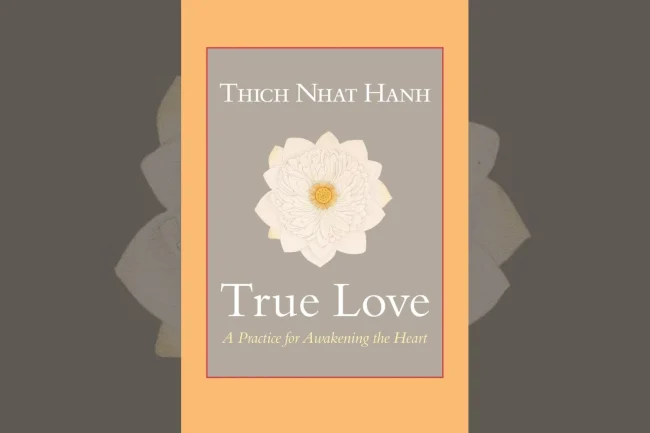
“True Love: A Practice for Awakening the Heart,” by Thich Nhat Hanh

True Love: A Practice for Awakening the Heart

Title: “True Love: A Practice for Awakening the Heart.”
Author: Thich Nhat Hanh
Publisher: Shambhala
ISBN: 1-59030-188-9

Bodhipaksa reviews a new book by Vietnamese Zen Master Thich Nhat Hanh and finds a treasure-trove of teachings on love.

Thich Nhat Hanh, the Vietnamese Zen Master, is one of the foremost Buddhist teachers in the West. He is rightly known as a preeminent teacher of mindfulness meditation, having burst into the reading public’s attention with his now-classic “The Miracle of Mindfulness.”

His style, however, is not the dry-as-bones, here-are-the-traditional-lists style that you find with many eastern teachers of mindfulness. His manner exudes warmth, friendliness, and compassion. He appreciates. He is understanding. He has a rich and creative approach to communicating spiritual practice. And it’s therefore no surprise that he has much to say about love, nor that on the whole he says it in a simple and eloquent style.

No background is given to the origin of the teachings in True Love, but they read as if they were initially delivered in the context of a retreat in the United States. The style is relaxed, informal, and often gently humorous. If you’re familiar with Thich Nhat Hanh’s speaking style you can hear his slow and accented voice as you read the words on the page.

True Love is a very practical approach to cultivating lovingkindness, but it’s a practical approach that does not skip on profundity. There’s a classic line near the start of the book where the author says, “You must love in such a way that the person you love feels free,” and in which, as is so often the case, Thich Nhat Hanh finds a fresh, original, and penetrating way of expressing an otherwise elusive truth.

You must love in such a way that the person you love feels free.

For Thich Hant Hanh, mindfulness and lovingkindness are not separate qualities. Although they may theoretically be seen as distinct, he regards mindfulness as incomplete without an infusion of metta; mindfulness is a warm, appreciative, and integrated faculty rather than a cold and objective gaze at our experience. Likewise, he sees lovingkindness as being incomplete, or rather impossible, without mindfulness: “Love Is Being There” is the title of one chapter, in which he reminds us that “the most precious gift you can give to the one you love is your true presence.”

He offers four “mantras” that we can use to help us enact love in our lives. He explains that in Buddhism a mantra is a spoken formula that, when spoken in a state of concentration, can alter a situation (a neat if unconventional definition). By extension then he regards anything said in a state of concentration to be, in effect, a mantra. And so he offers mantras such as:

  • Dear one, I am here for you
  • Dear one, I know that you are here, and it makes me very happy
  • Dear one, I know that you are suffering, that is why I am here for you
  • Dear one, I am suffering, please help.

Some of us may not be comfortable with the precise form of the wording — I can’t imagine calling my wife “dear one” — but the message in these four mantras strikes me as being a simple but powerful application of lovingkindness, empathetic joy, and compassion.

In True Love, Nhat Hanh places the cultivation of mindfulness and lovingkindness in an existential context. He reminds us that

We have a great fear inside ourselves. We are afraid of everything–of our death, of being alone, of change.

He also points out that “mindfulness helps us to touch nonfear.” We do this through transcending “the notions of being and nonbeing,” and the “notions of birth and death,” and this in turn is achieved by “looking deeply” with mindfulness.

He also puts the teaching of love in a firmly nondualistic framework:

Every time you have an energy that needs to be transformed, like jealousy or fear, do something to care for this energy, for this negative energy, if you do not want this energy to destroy you… There should be no conflict between one element of our being and another element of our being. There should only be an effort of taking care and being able to transform. So we must have a nonviolent attitude with regard to our suffering, our pain.

This nonviolent approach to transformation is rooted in love. We do not look at our destructive tendencies as things that must be destroyed (for that would be employing violence in the pursuit of nonviolence) but as confused and hurt parts of ourselves that must be befriended and understood. Love is the nonviolent conqueror, transforming through a mature and loving care, “the care given by the big brother to the little brother.”

The task of the meditator is not to chase away or to suppress the energy of anger that is there but to invite another energy that will be able to care for the anger.

The book has some peculiarities. For one thing there is a recurring theme about how quick and easy transformation is. Sometimes we’re told “three weeks are enough to transform the pain,” while other times “the result could be there, maybe, in three or four minutes.” It’s certainly good to remind people that change can happen quickly, but more often people need reassurance in dealing with the relatively slow pace of change that they experience, and in my view Nhat Hanh goes a little over the top in a way that sounds rather like salesmanship.

And Nhat Hanh has a longstanding habit of “quoting” the Buddha, when what he’s actually doing is at best paraphrasing him and at worst putting words into his mouth.

But these minor quibbles aside, this is an excellent book. There are some interesting asides that branch from the main narrative, including an amusing discussion of “telephone meditation” (including a warning not to expect the phone to be picked up immediately — or at all — when calling his retreat center in France), and a discussion in which he points out that we have a right to demand that our political leaders cultivate mindfulness and lovingkindness.

Complete beginners to meditation and Buddhism will find in True Love a systematic guide to cultivating love, mindfulness, and wisdom, and old hands will find enough freshness, inspiration, and profundity to enrich their practice for months or years to come.


Read More
Menu

Wildmind is a Community-Supported Meditation Initiative. Explore the benefits of becoming a supporter.

Close Welcome Bar