lovingkindness practice

What Rikers Island taught me about meditation

Prison can be a tough environment for those who work there as well as for inmates. Psychotherapist Steve Bell reflects on a few tough months spent in Rikers Island and realizes how much he learned.

I find myself on Rikers Island

For four months last year I worked with women detainees on Rikers Island in the Intense Treatment Unit, or ITU. Those four months were an adventure, but I won’t easily forget the trauma and abuse the women reported, and eventually the need to live a simpler life led me to give up working there.

The idea of the ITU was to try and apply the work of Marsha Linehan — who created Dialectical Behavioral Therapy (DBT) for people with borderline personality disorder (BPD) — to an incarcerated population. One of the core skill areas was mindfulness, and we began every skill group with a short meditation.

Some of the women were waiting for trial: there because they couldn’t pay the $500 bail before their trial for possession of drugs. A few were doing their sentences there or were detoxing before going upstate. If you’re sentenced to less than a year, you stay in Rikers instead of going upstate.

Most of the detainees on the intense treatment unit (ITU) did not initially buy into meditation and mindfulness. At times the women would mutter in frustration during meditation sessions as they tried to stay focuses in the face of the noises outside our group room. A few, more mentally disorganized, gave up, jiggled and sat there during the short meditation, not participating. Many initially thought meditation was weird but after a while took to it and could see the benefit.

Lovingkindness and mindfulness are one

I was there to teach mindfulness, but I learned a lot about mindfulness as well. The first thing I realized in teaching meditation was how important it is to bring metta, or loving-kindness, into the mindfulness of breathing practice. Usually I regard the practices as separate, and alternate them, but I came to see them as two sides of the same coin. When I made a suggestion like, “Kindly and gently bring yourself back to the breath,” I realized that lovingkindness had become integrated into my practice of the mindfulness of breathing meditation. One woman took this idea and used it to the maximum, seeing care and gentleness towards herself as an essential skill she’d never been taught. Kindness towards herself, at a very basic level, unlocked something within her. She came in to the program very upset, detoxing off drugs, and could not talk without crying. She left with more self-possession, more in control, more aware of herself, and with a new tool to fight her addictions.

Mindfulness and acceptance

Mindfulness isn’t “clearing thought” or “stopping distractions” but merely being aware what is going on, with whatever arises. If you’re patient and diligent, things settle and there will be more space, and you can become less distracted, more concentrated, and have more continuity of purpose; that is more long-term goal, the fruit of the practice.

The immediate goal in meditating is to just observe what arises as you try to follow the breath or connect with your metta. Afterwards you may feel more concentrated and mindful, but while meditating you might not. You might realize how distracted you are, and almost feel like meditation is making you more distracted. It’s not the meditation, though; that’s how you really are and you’re just not aware of it.

You may hope “distractions” go away when they are present, but that’s not always helpful. I worked to develop a curiosity about the contents of my mind, not being judgmental about what was going on in my experience. Seeing others’ frustration helped me to identify my own impatience and frustration.

Start where you are

When we watch our mind in meditation we can perhaps notice layers of judgment, impatience, and frustration about what is happening when we tune into ourselves. We can be mindful of that too. We have to know what is present before we look to change it. I heard someone say the essence of Pema Chödrön’s teaching is, “start where you really are,” and that expresses what I’m trying to describe. Only after we accept ourselves can we can begin to explore what tools we have for transforming ourselves, evaluate what works, and experiment with new ways of working with what is really going on. Learning that balance of acceptance and of exerting effort is a very important skill, not just in meditation.

If you see an express train coming, get out of the way

Another thing I had the privilege of learning while teaching female detainees is that it’s mettaful not to attempt the impossible in meditation. Sometimes I have thoughts that are like an express train; they have so much momentum that focusing on the breath isn’t even an option for a time. What’s the best thing you can do when an express train is coming through? Make sure you’re not standing on the tracks. Get out of the way. Let it go by. Don’t try to stop it. Watch it pass.

Meditation becomes less exhausting when I don’t try too hard, don’t try stop express trains, stop trying to do the impossible. There is a quality of metta in dropping the impossible project, accepting what you find, and opening up to new more subtle ways of working with your mind than unmindful and crude brute force.

You can even learn from your “distractions” – “Why am I having this daydream?” It’s important to not get too caught up in the investigation, but it’s also helpful to employ a sense of kindly curiosity.

“Metabolizing” distractions

Instead of doing something to get rid of difficult feelings, I observe them, honor and validate them, face and “metabolize” them. I met someone who thought doing that was masochistic, but I think distracting oneself, tuning out from your experience, can be masochistic because it’s more harmful in the long-term not to deal with difficult mental states.

The thing about accepting whatever arises is that often I’m not going to like what I find when I tune in. I might find a closet full of unwanted bric-a-brac: unwanted memories, racing thoughts, unpleasant emotions and memories, unresolved nagging questions I have avoided, etc. I stay with my experience, and watch how it evolves. Have you ever noticed that if you look at a cloud long enough it will subtly change shape?

I tune out for a reason. It’s a fundamental axiom of Dharma, and I think human nature, that we push away the unpleasant and pull towards us the pleasant. That includes the contents of our mind. There is a cost for denying our experience, a kind of violence towards ourselves.

In teaching meditation, I saw my own maneuvers to avoid my painful feeling reflected in what others were doing, and this helped me be aware of my own habitual tendencies. I worked to try and draw people out and put words to their experience, and listening to others’ accounts of meditation was fascinating and an opportunity to learn. I also saw the importance of articulating to others my experience.

Marsha Linehan points out that those who face their suffering mindfully learn from it. Being abused isn’t a predictor of how good a parent someone will be — it’s whether they have faced their traumas. Those who don’t look at the whole of their lives, even the unpleasant bits, do not learn from it. Meditation can be a way of facing our suffering and metabolizing it, making use of it. That’s the best thing you can do in a bad situation.

Suffering becomes a trigger for mindfulness

We can even make suffering into a trigger for mindfulness. Milarepa says a dog chases sticks that are thrown. The tiger turns and faces the stick thrower. I sometimes feel like that is what therapy and meditation have in common: Facing the stick thrower.

When people expressed what was really going on I saw the most spontaneous and genuine outpourings of support and empathy from others in the group — and these were tough women not prone to flights of spontaneous empathy. I found myself saying often, “I’d probably be dead if that happened to me,” when they recounted their traumas.

There’s something about talking simply and directly about the content of our minds that makes for a connection. It’s a model of communication, more accurate, less blaming, pure. Simply saying “I feel this way,” has the power of connection. When you say, “you did this,” someone can debate that. But our descriptions of our feelings isn’t really something to debate about.

And so by teaching meditation to these woman who were damaged and suffering, I saw more clearly how I try to avoid my experience, how I could work to start where I really am. I closed the distance between us, could see the circumstances that swept them into a more negative life, see myself not as so separate and not so different from them. By teaching others, I learned about myself; we learned together. I was proud to work to metabolize their suffering for a short time.
Read More

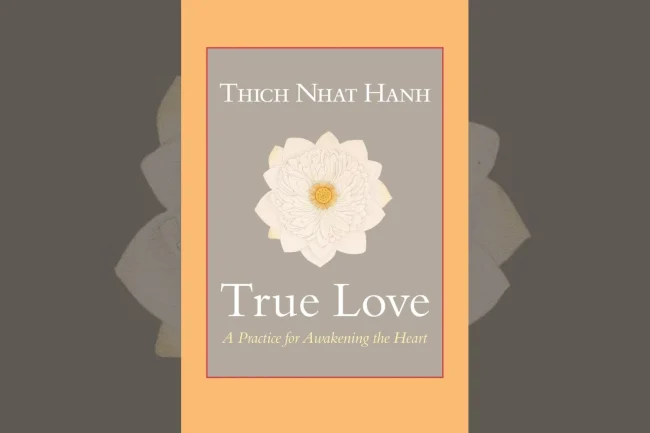
“True Love: A Practice for Awakening the Heart,” by Thich Nhat Hanh

True Love: A Practice for Awakening the Heart

Title: “True Love: A Practice for Awakening the Heart.”
Author: Thich Nhat Hanh
Publisher: Shambhala
ISBN: 1-59030-188-9

Bodhipaksa reviews a new book by Vietnamese Zen Master Thich Nhat Hanh and finds a treasure-trove of teachings on love.

Thich Nhat Hanh, the Vietnamese Zen Master, is one of the foremost Buddhist teachers in the West. He is rightly known as a preeminent teacher of mindfulness meditation, having burst into the reading public’s attention with his now-classic “The Miracle of Mindfulness.”

His style, however, is not the dry-as-bones, here-are-the-traditional-lists style that you find with many eastern teachers of mindfulness. His manner exudes warmth, friendliness, and compassion. He appreciates. He is understanding. He has a rich and creative approach to communicating spiritual practice. And it’s therefore no surprise that he has much to say about love, nor that on the whole he says it in a simple and eloquent style.

No background is given to the origin of the teachings in True Love, but they read as if they were initially delivered in the context of a retreat in the United States. The style is relaxed, informal, and often gently humorous. If you’re familiar with Thich Nhat Hanh’s speaking style you can hear his slow and accented voice as you read the words on the page.

True Love is a very practical approach to cultivating lovingkindness, but it’s a practical approach that does not skip on profundity. There’s a classic line near the start of the book where the author says, “You must love in such a way that the person you love feels free,” and in which, as is so often the case, Thich Nhat Hanh finds a fresh, original, and penetrating way of expressing an otherwise elusive truth.

You must love in such a way that the person you love feels free.

For Thich Hant Hanh, mindfulness and lovingkindness are not separate qualities. Although they may theoretically be seen as distinct, he regards mindfulness as incomplete without an infusion of metta; mindfulness is a warm, appreciative, and integrated faculty rather than a cold and objective gaze at our experience. Likewise, he sees lovingkindness as being incomplete, or rather impossible, without mindfulness: “Love Is Being There” is the title of one chapter, in which he reminds us that “the most precious gift you can give to the one you love is your true presence.”

He offers four “mantras” that we can use to help us enact love in our lives. He explains that in Buddhism a mantra is a spoken formula that, when spoken in a state of concentration, can alter a situation (a neat if unconventional definition). By extension then he regards anything said in a state of concentration to be, in effect, a mantra. And so he offers mantras such as:

  • Dear one, I am here for you
  • Dear one, I know that you are here, and it makes me very happy
  • Dear one, I know that you are suffering, that is why I am here for you
  • Dear one, I am suffering, please help.

Some of us may not be comfortable with the precise form of the wording — I can’t imagine calling my wife “dear one” — but the message in these four mantras strikes me as being a simple but powerful application of lovingkindness, empathetic joy, and compassion.

In True Love, Nhat Hanh places the cultivation of mindfulness and lovingkindness in an existential context. He reminds us that

We have a great fear inside ourselves. We are afraid of everything–of our death, of being alone, of change.

He also points out that “mindfulness helps us to touch nonfear.” We do this through transcending “the notions of being and nonbeing,” and the “notions of birth and death,” and this in turn is achieved by “looking deeply” with mindfulness.

He also puts the teaching of love in a firmly nondualistic framework:

Every time you have an energy that needs to be transformed, like jealousy or fear, do something to care for this energy, for this negative energy, if you do not want this energy to destroy you… There should be no conflict between one element of our being and another element of our being. There should only be an effort of taking care and being able to transform. So we must have a nonviolent attitude with regard to our suffering, our pain.

This nonviolent approach to transformation is rooted in love. We do not look at our destructive tendencies as things that must be destroyed (for that would be employing violence in the pursuit of nonviolence) but as confused and hurt parts of ourselves that must be befriended and understood. Love is the nonviolent conqueror, transforming through a mature and loving care, “the care given by the big brother to the little brother.”

The task of the meditator is not to chase away or to suppress the energy of anger that is there but to invite another energy that will be able to care for the anger.

The book has some peculiarities. For one thing there is a recurring theme about how quick and easy transformation is. Sometimes we’re told “three weeks are enough to transform the pain,” while other times “the result could be there, maybe, in three or four minutes.” It’s certainly good to remind people that change can happen quickly, but more often people need reassurance in dealing with the relatively slow pace of change that they experience, and in my view Nhat Hanh goes a little over the top in a way that sounds rather like salesmanship.

And Nhat Hanh has a longstanding habit of “quoting” the Buddha, when what he’s actually doing is at best paraphrasing him and at worst putting words into his mouth.

But these minor quibbles aside, this is an excellent book. There are some interesting asides that branch from the main narrative, including an amusing discussion of “telephone meditation” (including a warning not to expect the phone to be picked up immediately — or at all — when calling his retreat center in France), and a discussion in which he points out that we have a right to demand that our political leaders cultivate mindfulness and lovingkindness.

Complete beginners to meditation and Buddhism will find in True Love a systematic guide to cultivating love, mindfulness, and wisdom, and old hands will find enough freshness, inspiration, and profundity to enrich their practice for months or years to come.


Read More

Aldous Huxley: “We can only love what we know, and we can never know completely what we do not love. Love is a mode of knowledge…”

Halfway between “the season of goodwill” and Valentine’s Day, Bodhipaksa looks at Huxley’s understanding of what love really is. Is love a feeling, or is it a way of knowing?

What do we mean when we say the word “love”? What does it really mean to love someone? In what way is love “a mode of knowledge.” When we’re talking about the fact that we love ice cream we obviously mean something very different from the love we talk about having for a person. One’s just a simple desire for sense-fulfillment while the other is much more complex. But even when we talk about loving another person there are many different forms of love. At one extreme there’s a kind of “love” where we don’t really see the other person at all: a love that’s based on projection and on wishful thinking, a love where we idolize the other.

Lovingkindness is not conditional in any way. It’s based on an empathetic resonance with the other person.

In a similar vein, there’s also a form of love that’s highly conditional. We love the other person as long as they’re enjoyable to be with, or as long as their desires are in accord with ours, as long as we get what we want, perhaps as long as the other person doesn’t change. When conditions change — for example when we stop getting what we want, or when the other person ages, our “love” collapses.

The love that Huxley talks about here is something very close to what Buddhism calls metta or lovingkindness. It’s not conditional in any way. It’s based on an empathetic resonance with the other person — or to put it more simply, we are aware of the other person as a feeling being, we are aware that just like us the other person wants to be happy and wants to escape suffering. This is just about the most basic thing that we have in common with others. Although this is a very basic form of knowing, it’s not an easy thing to remember that others have the same basic aspirations as we do. But when we do experience metta we can hold love in our hearts for others whether or not we like them or even know them. It’s a completely unconditional love.

Whenever we want something from another person, there’s a danger that we’ll lose sight of that basic commonality, that sense that we’re all in it together, sharing a mode of being in which suffering and its end are our deepest drives and our deepest connection. We can lose touch with this understanding very easily. Just think about when you’re in a hurry and other people do things that delay you — they stop you to have “a quick word” or they drive in front of you more slowly than you would like. We can very easily see another person as an obstacle rather than as a fully-fledged fellow human being. Whenever we crave something from another person we’ll tend to lose sight of their humanity and see them primarily in terms of what we want from them, even if that’s just to get out of our way.

When we know the longing for happiness that lies in the heart of all beings we can start to really love them.

As Huxley says, we can only love what we know. When we know the longing for happiness that lies in the heart of all beings we can start to really love them. Without that awareness, we can’t love other being in any full sense. So metta (lovingkindness) involves a certain kind of knowing, or insight, into the nature of sentient beings. Lovingkindness requires a degree of insight.

Talking about love in this way though is very general, though. All beings want to be happy. All beings want to be free from suffering. But we don’t just love people en masse. We can love humanity, but we’re not ourselves fully human unless we love particular human beings. This is perhaps why the development of lovingkindness meditation doesn’t just include the last stage, which is where we send thoughts of lovingkindness out towards all beings. There are a number (either four or five, depending on the exact form of the practice) of stages where we cultivate lovingkindness towards people we know personally. In cultivating metta in this way we are developing relationships based on love and appreciation, especially when we’re cultivating metta for someone we already regard as a friend.

Love involves curiosity and appreciation.

A word for this particular form of love is friendship (as opposed to the general “friendliness” of the final stage of the practice), but even that doesn’t do the word justice. The powerful bond that can form between two people, whether or not they’re romantically connected to each other, can’t really be called anything but “love,” no matter how ambiguous and overloaded that term is. Love that seeks to “know completely” is what I think of as real love, with the other meanings of this multivalent word being mere shadows and distortions.

What Huxley’s quote reminds me is that this kind of love involves curiosity and appreciation of another person. We want to know the other person on ever deeper levels. Even clashing with a person we really love leads to us wanting to understand them (and our relationship with them, and hence ourselves) even more. This kind of love involves a deep desire to know and understand another person intimately, because that kind of knowing is the most satisfying thing we can do in life.

Wisdom and compassion are not in fact two different but conjoined qualities. They are one thing.

This I think takes us somewhat beyond simple lovingkindness (although there’s nothing very simple about it) and into the realm of insight. There are many words used to describe insight, but one of the more interesting is “vidyā,” which Sangharakshita parses (PDF) as “aesthetic, appreciative understanding.” One Sanskrit dictionary includes in its definition of vidyā, “knowledge of soul.” Vidyā, as a form of wisdom, is a “mode of knowledge,” and it seems to unite in some way the traditional understanding of wisdom (as a kind of cognitive understanding) and compassion.

Wisdom and compassion together are the two “wings” of enlightenment, and are considered to be inseparable. Vidyā makes it clear that wisdom and compassion are not in fact two different but conjoined qualities. They are one thing, which the unawakened mind persists in seeing in a dualistic way. The term vidyā rather beautifully helps us to overcome that dualistic tendency.

So this I think is what love is in its fullest sense: it’s vidyā, a desire to know ourselves and others completely, an appreciative desire to understand reality to its very depths. Love is a mode of knowledge, or even a mode of exploration. The more we love, the more we want to understand, and the more we understand, the more we love.

Read More

Ursula K. Le Guin: “Love doesn’t just sit there, like a stone, it has to be made, like bread; re-made all the time, made new.”

Ursula K. Le Guin

Everything’s impermanent, but rather than be depressed by this fact we can use it to our advantage. Bodhipaksa looks at the Buddhist practice of developing lovingkindness and offers six lessons that can help us keep love alive.

Lovingkindness meditation presupposes a number of factors that cause love to grow. If you’re not familiar with the practice of lovingkindness meditation I wholeheartedly recommend that you try it. This kind of meditation is a gentle but powerful way of working with our emotions, and I’ve noticed the following principles embedded in the form of the meditation:

  1. First, we have to pay attention to ourselves. If we’re not aware of ourselves and our feelings then we’ll lack the responsiveness that allows us to love others. In the formal practice we bring our awareness into the body and into our hearts.
  2. If we don’t cultivate a basic sense of caring for ourselves and our own well-being then we’ll also find it hard to love others. So we need to start here and develop a wholesome relationship with ourselves. The sitting practice of lovingkindness always begins with us cultivating love for ourselves.
  3. Then we have to give others our attention. We can’t include love in a package of multitasking. We need to spend time with others, and to give them as best as possible our full attention. When my attention is divided between my daughter and, say, some article I’m trying to read, an unpleasant tension arises that can easily lead to impatience. It’s much better just to put down what I’m doing and focus just on her. The more we give people our undivided attention the easier it is to cultivate love for them.
  4. We need to relate to others as feeling beings, and to take their happiness seriously. When we see others as being either means or obstacles to our own happiness we’re not relating to them as feeling beings. To love is to take another’s well-being seriously, and we can’t do that if we don’t acknowledge the need others have to be happy.
  5. We need to communicate that we love others. In lovingkindness meditation we commonly repeat phrases like, “May you be well. May you be at ease.” Even if we never speak those words to the other person they have an effect on how we feel. But outside of meditation it’s even more powerful to communicate with another person that we love them. This doesn’t have to be done in words, of course. A glance or a kind act can be an effective way of communicating a sense that we love others. But the words themselves are less ambiguous and often more powerful.
  6. We need to repeat the above frequently. Love, if it’s not being cultivated, is beginning the slow process of withering. We need to bear others in mind as often as we can, calling to mind our love for them. We need to spend as much time as we can with those we love. In this way, our love can keep being reborn and our irritability, intolerance, and indifference towards others can fade quietly away.

Buddhism teaches that everything’s impermanent, which can seem like a real downer until you look more closely into what that means. At first glance it can seem rather depressing: I’m impermanent, and everything I love is impermanent too. I’m going to die. Everything I love is going to die. Love itself is impermanent. Oh, oh! Here comes bleak existential despair!

But the fact that everything is impermanent is actually the most wonderful thing about life. If anything about me was not impermanent then that would be something I couldn’t change. If my personality was not impermanent I’d never be able to change it. I’d be stuck with those aspects of my personality (like my irritability and my distractedness) that cause me most suffering. And the same’s true for you. If you have a tendency to depression, or to over-eating, or to anxiety, those tendencies are impermanent. They can be changed. They can become less predominant in your life. They can even disappear entirely.

What we call a personality is nothing more or less than an amazingly interwoven fabric of impermanent events…

Love dies, but it is also reborn. Hatred is reborn, but it also dies. What we call a personality is nothing more or less than an amazingly interwoven fabric of impermanent events being born and dying and being reborn again.

We tend to think of death and rebirth in “macro” terms — about the end of one life of the beginning of another, but actually death and rebirth are taking place in this very moment as cells, sensations, feelings, emotions, and thoughts are coming into being and passing away. Left to their own devices — without our conscious intervention — the overall texture of our personality won’t tend to change much over time. Things keep changing, but they change in such a way that the stay the same, much as you can look at an eddy in a river and see that in every moment it’s different, but it still has about the same size, shape and position.

Generally it takes conscious intervention to bring about a change in the balance of the various mental factors that constitute a personality. A mindful awareness of our mental states, combined with skillful action, helps shape the process of death and rebirth that’s moment by moment unfolding within our consciousness. Something as simple as letting go of a critical and angry train of thought helps that part of ourselves to pass on into oblivion. Choosing to think about what we’ve achieved helps bring about more happiness. Contemplating the fact that, just as we do, others experience suffering and wish to be happy helps to bring into being the forces of compassion and love.

Love is not a thing that happens to us. It’s a thing we do.

Events can shape us, of course. Tragic events, unpleasant events, unexpected blessings, and the responses of others can bring about profound changes in our personality and outlook. But it’s the way we respond to outside events that is the true shaper of our being. It’s we, ultimately, who change ourselves.

It’s good to bear all of this in mind when we contemplate love. Love is not a thing that happens to us. It’s a thing we do. It’s not a “thing” that lives inside of us and can be left to its own devices. It’s an action. It’s not an experience. It’s a way of relating.

If we are not bringing love into being, it is in the process of dying within us. If we don’t sustain our love, it withers — slowly perhaps, but inexorably. We have to pay attention to love in order that it continues to live and grow within us. And this means that we have to pay attention to others in order that our love continue to flourish.

Read More

Chogyam Trungpa on Warriorship

Woman in warrior pose, in front of what appear to be orange flames

In these extracts from a forthcoming book from Shambhala Publications, the late Chogyam Trungpa defines his vision of the peaceful Buddhist warrior and explains the joys of the warrior’s path.

The warrior’s weapons

If victory is the notion of no enemy, then the whole world is a friend. That seems to be the warrior’s philosophy. The true warrior is not like somebody carrying a sword and looking behind his own shadow, in case somebody is lurking there. That is the setting-sun warrior’s point of view, which is an expression of cowardice. The true warrior always has a weapon, in any case … The definition of warriorship is fearlessness and gentleness. Those are your weapons. The genuine warrior becomes truly gentle because there is no enemy at all.

From the manuscript of CONQUERING FEAR: THE HEART OF SHAMBHALA. Forthcoming from Shambhala Publications in 2009.

* * * * *

The joy of warriorship

When we speak of fearlessness, we are describing a positive state of being full of delight and cheerfulness, with sparkling eyes and good posture. This state of being is not dependent on any external circumstance. If you can’t pay the electric bill, you might not have hot water in your house. The building you live in may not be well insulated. If you don’t have indoor plumbing, you may have to use an outhouse. Millions of people in the world live this way. If you can raise your good posture of head and shoulders, then regardless of your living situation, you will feel a sense of joy. It’s not any kind of cheap joy. It’s individual dignity. This experience of joy and unconditional healthiness is the basic virtue that comes from being what we are, right now. You have to experience this natural healthiness and goodness personally.

When you practice meditation, that brings the beginning of the beginning of this experience. Then, when you leave the meditation hall and go out and relate with the rest of reality, you will find out what kind of joy is needed and what kind of joy is expendable. The experience of joy may be a momentary experience, or it could last a long time. In any case, this joy is an eye opener. You are no longer shy of seeing the world. You find that the joy of warriorship is always needed.

From the manuscript of CONQUERING FEAR: THE HEART OF SHAMBHALA. Forthcoming from Shambhala Publications in 2009.

Read More

True heroism is to practice love

Buddha and his protector, Vajrapani

Life as a battle is a common metaphor — even in Buddhist teachings. Bodhipaksa shows how the Buddha subverted the language of violence so that true heroism was to practice love.

If you look closely at life you’ll probably see that in at least some respects you see it as a battle.

Sometimes we say we “struggle” to keep up with our responsibilities. At times it seems we’re in “competition” with others for approval, status, or power. We talk about “fighting off” a cold. We say that “forewarned is forearmed.” We say that we made a suggestion, only to have it “shot down.” Doctors are constantly searching for new “weapons” to fight disease. Law enforcement workers “fight crime.” Advertisers “target” us with ad “campaigns.” The language of battle is a part of everyday life, as are the emotional attitudes that come with competition.

And we often see success in terms of how many victories we have, how well we’ve protected or expanded our turf, and how successful we’ve been in fighting our way to the top. Power, and its trappings — money, possessions, and the deference of others — are our society’s measure of success.

This verse from the Dhammapada —

If one should conquer thousands in battle,
and if another should conquer only himself,
his indeed is the greatest victory.

— is a reminder that there are other kinds of attainment.

These words are also powerful example of an instructive device that the Buddha often employed, where he takes an externally-performed action that is highly valued and shows that it gains even greater value when turned inwards.

The Buddha lived in a world that to us would seem superstitious and even barbaric. Society was in the grip of a rigid social system where people were judged not on their intelligence, capability, or attainments but on their birth origins. The way to happiness involved fulfilling without question the duties of one’s caste. One of the main religious practices was to slaughter animals in order to propitiate the gods. In order to purify oneself from ethical lapses it was believed that all one had to do was to bathe in rivers — even if the rivers were literally polluted. And war was not only common but brutal, and warriors believed that if killed in the heat of battle they would be lifted directly to heaven.

And in the midst of this madness was the supreme sanity of the Buddha.

According to the Buddha:

  • The true “Brahmin” (religious person) is not someone born into a certain family but someone who acts in an ethical manner. Anyone can become a holy person, irrespective of birth.
  • The true outcast is not someone born into a lowly family but someone who neglects his or her human potential and acts ignobly, by speaking or acting in a selfish or violent manner.
  • The way to happiness does not consist of following externally-imposed duties, but of following an inner path of cultivating wisdom and compassion.
  • True sacrifice doesn’t involve slaughtering animals but practicing generosity and renouncing our addiction to violence.
  • Purification comes not through external rituals but through living ethically and by observing the mind in meditation.

Over and over again the Buddha attempted to subvert the common understandings of his time. This was a subtle and intelligent approach to take. Rather than directly oppose those who saw things in a deluded way, and thus giving rise to resistance, he tapped into their concerns. He suggested, for example, not just that battle was cruel and destructive, but that you could become a greater warrior by seeing that there is a higher form of battle — an inner struggle against destructiveness, selfishness, and delusion.

And sometimes, just as the outer world can seen as combative, so too the inner world can seem like a battleground. There are times when we are involved in a struggle with ourselves, when our thoughts seem to be assailing us and when we are trying to fend them off.

Martial metaphors are in fact common in Buddhist teachings on meditation, with Shantideva encouraging us to pick up our mindfulness as swiftly as we would pick up a sword dropped in battle, the meditator being compared to a fletcher straightening an arrow, and the Buddha’s monks being compared to warriors battling sensual distraction.

But we have to be careful with these martial metaphors, perhaps even more so than with other figures of speech, although there are dangers in all forms of literalism. We do have to do inner work, and sometimes that work will seem to be hard and unrewarding — or to be a “struggle.” We do need qualities that are traditionally associated with the warrior spirit, qualities such as courage, clarity, steadfastness, loyalty to a cause, and the ability to handle discomfort.

But we need to be careful not to bring attitudes of ill will into our meditation practice. In meditation it’s ourselves we are struggling with, and in a battle where we regard ourselves as the enemy we can’t win. Elsewhere in the Dhammapada the Buddha says:

Hatred is never overcome by hatred.
It is overcome by love – this is eternally true.

Ultimately we need to love the thoughts and feelings that assault us in meditation. We do need to overcome our selfishness, our ill-will, and our delusion, but we can’t meet them on their own level. We need to meet them with love and compassion. And when we experience victory over ourselves in this way, we have a happiness greater and more lasting than any external victory can bring.

Read More

Healing the mind’s wounds

Every time we have a thought tinged with ill will, jealousy, anger, hatred or revenge, we are self-harming, and we are causing a wound to the mind. Whether the thought be about ourselves or another being, or an inanimate object, we are injuring the mind.

Lama Rangdrol, at a talk in the Bay Area, spoke about how we don’t even trust that our minds will heal when we injure them. He said when we cut our hand, we find some ointment, and a band aid, and trust that it will heal, but we never trust our minds will heal when we have dark thoughts, or fall into depression.

I went away from this talk reflecting on what was the ointment and the band aid for the mind, and I realized it was metta: The practice of loving kindness. It was the meditation that the Buddha gave to his disciples who while meditating in the forests came running back to there teacher crying: “There are monsters, ghouls and evil spirits out there.” The Buddha smiled, calmed them and taught them the metta bhavana, the practice of friendliness, the release of the heart, which shines forth, blazes and penetrates all beings. Loving Kindness. He sent them back into the forest and not one monk returned out of fear. They had healed their minds.

Before we can soothe our minds and heal our minds, we must begin to slow our lives down so we can hear our thoughts.

The Buddha taught pain, and the cessation of pain. He gave us many formulations and methods to work with the pain. Metta, part of the four immeasurables, or the sublime abodes, is one of these methods.
Before we can soothe our minds and heal our minds, we must begin to slow our lives down so we can hear our thoughts. We must learn to allow our thoughts to arise and cease. We must learn not to hold on to our thoughts, or chase our thoughts like a child who is chasing his or her kite. We must learn not to dwell in our thoughts. We must trust the essence of the Buddha’s teaching, the universal law: “This being, that becomes; from the arising of this, that arises; this not being, that does not become; from the ceasing of this, that ceases.” This is the universal law of conditioned co-production.

In simpler terms we must trust that everything is impermanent, that things are always changing. If you tried to count your thoughts you would be amazed at how many thoughts you have in half an hour, and how many thoughts you try to hold on to.

Metta is one of the ways we can begin to soothe our thinking.

This is my reflection for the summer and fall months. I offer this poem, which I wrote some time ago. With Loving kindness,
Vimalasara.

Advice For Your Anger

There is nothing worse than seeing flaming red
With Butterflies churning away in your stomach.
And your body has ignited into a blazing fire
Extinguishing all the love in your heart.
It’s a warning. Your mind is full of toxic passion.
It’s your bull inside your head, charging with raging anger.

And when your body is consumed with anger
You need to stop when the stars before your eyes are red.
You need to realize that you’re not in control of your passion
If you can feel your breath palpitating inside your stomach.
It’s a warning that you’ve abandoned your heart
You need to find some love to put out your intoxicating fire.

If you ever hear yourself hissing and spitting like a fire
Take a deep breath and try to control your red hot anger.
This will help you dampen your worst thoughts inside your heart
Otherwise you may trigger another person to see sizzling red.
And they’ll stoke up everything from the depths of their stomach
And you will retaliate with a fuming and burning passion.

God forbid you don’t commit a crime of passion.
And pray that you manage to put out your bush fire
With the hope that you can calm your head and stomach
And douse out the fanning flames of your anger.
Try to ignore, every time someone winds you up and waves red
By remembering that it’s important to pause and connect to your heart.

Beware that when hatred sparks up inside your heart
Jealousy and revenge will become compulsive passions
Not even a street traffic light stuck on flashing red
Will stop your anger – It will flare up into a scorching fire.
Hatred is also resentment, prejudice and ill will mingled with anger
Try not to harbor these smoldering poisons inside your stomach.

Anger and hatred mustn’t become flammable luggage inside your stomach
Otherwise you’ll be unhappy and have fear stalking your head and heart.
And not even your family and friends will cope with your fiery anger.
Try to let go of all your pollutant and heated passions
Because they will stoke your head into a combustible fire
And you’ll be like the colored blind bull lunging towards the color red.

So when you feel a flicker of fire inside your stomach
It’s a warning that you’re full of anger and imagining red
What you need is compassion purifying your heart.

Read More

Ask Auntie Suvanna: How to love Dick

"Dick Cheney: WANTED for War Crimes" Poster, Canada, 2011.

Ever despair at how to cultivate lovingkindness for Dick Cheney, or ponder the effect of anti-depressants on Buddha Nature? If so, check out Auntie Suvanna, who applies her unique wisdom and wit to your queries about life, meditation, Dharma, family and relationship issues, or anything else that comes up. Why not write to her and tell her your troubles? They don’t have to be Buddhist troubles – any kind will do!

Dear Auntie,

Although I don’t (or haven’t yet), a number of people who know I am working on cultivating lovingkindness ask me how to do so for Dick Cheney and his ilk. Actually, their question is more like “How can you? He’s so evil.” I would sure love to hear your response!

Signed, A Canadian Trying to Love a Bad American

Dear Canadian,

I have noticed that it is sometimes easier for Canadians, such as Jim Carrey and Nelly Furtado, to cultivate lovingkindness. However even for them, some Americans can be challenging, eh? In general, my readers are a kind and noble people who have struggled throughout history to cultivate lovingkindness for the likes of John Ashcroft, Genghis Kahn, Paris Hilton, and finally, Vice President “Shoot First and Ask Questions Later” Cheney.

The Buddha’s position was clear: He encouraged us to cultivate love for all beings as if each were our only child.

Before we delve into the question of loving Mr. Cheney, let us explore the alternative, which is, of course, to hate him. Suppose we wish for him, say, four heart attacks, and several painful operations including a coronary artery bypass, stenting, and balloon angioplasty. We could also wish that his popularity would plummet, that he would get drunk and accidentally shoot a friend, and that his daughter would not only come out as a lesbian but decide to write a memoir. Of course, all these things have already come to pass. His suffering may have greatly benefitted various late-night talk show hosts in terms of providing material, but has it done the rest of us any good?

If not, perhaps it is because the ills we wished upon him were too minor. Even a peace-loving Canadian might argue that what would really help us is for Mr. Cheney to…die. We will find out no doubt in the not too distant future. But what to do in the meantime?

The Buddha’s position was clear: He encouraged us to cultivate love for all beings as if each were our only child. My advice to you then, is this: Firstly, firmly establish in your mind the image of Richard sound asleep in giraffe pajamas. Richard is the name you gave him. You also gave him the pajamas. Notice the device inside his chest, poised to deliver a shock to restore the beat of his worn out, sad and violent heart.

Tell your friends that even though he has made many terrible mistakes, you can’t help but love him. Tell them you are always honest with him and encouraging him to do the right thing. Perhaps in the future they will think twice before they speak, knowing they are talking about your beloved son.

Read More

All Embracing Urge: Motherhood and Practice

SrimatiMotherhood has opened up a new emotional realm for Srimati. But how to love wholeheartedly and continually let go is the ground of her daily practice.

Against the odds and ahead of hard evidence, I instinctively knew I was pregnant. As I lay in the bath there was something magical in the air. I found myself, hand on belly, making a heartfelt pledge in a tender whisper: “If you’re there, you’re welcome and I’ll do my best for you.” This was the beginning of the greatest love of my life. One week into my relationship with this unknown, unexpected being, I was howling with an ancient grief as I bled, and feared it was over. The pain of that love had also made itself felt.

But all was well, and that feeling of love and pain gathered substance during the months of pregnancy. My body surrendered more and more to its task, and love for my unborn became increasingly tangible with the growth of the life in my belly. So did the fears. Dreams of the coming birth were mostly beautiful, but my heart was full of the fragility of human life. I felt I would do anything to protect this life inside me, and yet there was so little I could do to ensure its wellbeing. That was ultimately out of my hands. Even before my child was born, I was learning that maternal love means letting go.

I spent an unforgettable night bringing my son into the world. In the calm and comfortable aftermath of that struggle, I lay stung awake by wonder, gazing at him. The blacks of his eyes shone in the dark, peacefully apprehending his new world as he lay between us, his parents, the very flesh that had created him. A few days earlier I’d dreamt I was begging a Nazi soldier not to shoot me, to give me one more week so I could see the face of my unborn child. Becoming a mother has shown me that the death of a child is the cruelest loss imaginable.

As a practicing Buddhist, such strong feelings have raised many questions for me. What gives rise to such powerful and self-sacrificing maternal love? To what extent does this love help or hinder us in living a spiritual life?

Some Buddhists claim parenthood is unhelpful from a spiritual point of view, partly because it opens you up to such incredible attachment. It is generally true that the more emotionally involved you are with someone, the more you are liable to be caught in attachment. At worst this can mean limiting, insecure ways of relating, and unhealthy dependence. Attachment is difficult to recognize and can be easily rationalized as something less selfish. For a Buddhist, however, identifying and uprooting this clinging is the very heart of practice and for a Buddhist parent it is no different.

Nevertheless certain Buddhist traditions take the image of maternal love as a metaphor to describe metta, universal loving-kindness:

As a mother watches o’er her child,
Her only child, so long as she doth breathe,
So let one practice unto all that live
An all-embracing mind.

Parenting, especially early parenting, can seem incomparably unselfish — but is it really? What enables such incredible resources to be unstintingly roused in the service of another human being? Perhaps it is because there is cellular identity with the child, especially in the mother’s case: My child is me. There is quite a leap between this and the empathetic identification of a Bodhisattva, the embodiment of compassion, with all living beings; but it is a powerful analogy.

I have come to value the power and vitality of maternal love and motherhood has given me a depth of experience that enriches my spiritual life. I have contacted a huge reservoir of passionate love for my son such as I have never experienced before. Most parents speak of this kind of love for their children. I prefer to see parental love as a spiritual opportunity. The answer is not to back away from the strength of that love, but to dwell deeply in it; to penetrate its nature and the nature of that which you love.

As a parent you have almost no choice but to love your child passionately, and this demands that you find the same intensity of wisdom. The more your heart is open, the more you can allow any wise reflections to touch you and let them transform you.

The story of Kisa Gotami is probably my favorite from the Buddha’s life. Kisa Gotami comes to the Buddha cradling her dead child. She is distraught, even a little crazed, and cannot accept that her child is dead. She has heard the Buddha is a great man, a great healer, and begs him to provide medicine for her ‘sick’ child. The Buddha replies that he will help her. She must find a mustard seed as medicine, but there is one condition: it must come from a household that has not known death.

Kisa Gotami sets out on her quest, knocking at doors. Those who greet her are happy to give her a mustard seed, but shake their heads when they hear of the condition. The living are few, but the dead are many. Kisa Gotami cannot find a house in which no one has died, and gradually a new perspective dawns. She sees the universality of death and this allows her to acknowledge what has happened. She buries her child, returns to the Buddha, and commits herself to the spiritual life.

Kisa Gotami “wakes up” during her quest. She sees that death and loss are universal, so she can finally grieve and let go of her child. This is a deeper engagement with life and death that sees it in a spiritual perspective. In accepting the death of her child, Kisa Gotami gains insight into the nature of human life. Obviously this is challenging ground. Kisa Gotami had the Buddha’s help. But it is not that she stopped loving, just that her love was placed in a much vaster context.

Tibetan Buddhist texts dwell on the mother-child relationship in many ways to evoke the intensity of love that human beings are capable of. The difficulty lies in transforming exclusive love into one that includes all beings. The prospect of loving every being like one’s only child is awesome, but life offers glimpses of such an experience. For example, when one grieves the death of a loved one, the combination of feelings arising from a personal loss, with an acknowledgment of the universality of death, can open up an intense love for all humanity.

Compassion comes with realizing that all beings will one day share this moment in their own way. Similarly, dying people sometimes reach a serenity where they accept impending death and are imbued with a sublime love for their family and for life itself — as if only this fullness of love is important, more important and powerful than death itself. Over the years I have thought a great deal about the nature of human love, ordinary human affection and intimacy with all its imperfections. It is this middle ground between the lofty climes of metta and the grip of unconscious attachment that I am interested in — that is where many of us stand for much of our lives.

When I first became involved in Buddhism I latched on to the notion of non-attachment because I was hurt by loss and death. I was 19 and didn’t know myself well. Although fairly bright and positive on the surface, I was unconsciously on the run from painful experiences. My adolescence had ended abruptly with my father’s illness and death, and I had witnessed the agony my mother suffered in losing him. I felt mature beyond my years, and my world of teenage rebellion became meaningless.

So, too, did my relationship with my first love, who had recently held such passion and promise for me. I had thought he was my soul-mate, the man I’d spend my life with. But my need for him melted away and I felt strangely alone. Suddenly, I found myself telling him it was over and telling my mother that I was leaving home.

Within a few months, my inner searching brought me to the Glasgow Buddhist Center, and I instantly recognized I had found the means to understand life and death that had been invisibly beckoning ever since I can remember. Although my response to the Dharma was largely sincere, I misconstrued some of what I learnt. While I rejoiced in my fortune at having come across the Buddhist path so young and unencumbered, I did not realized how much emotional backlog I had to deal with. It was during this initial phase that I developed a sort of defended pseudo-independence and fooled myself that I was free of attachments.

Fortunately meditation and spiritual friendship sorted me out. I threw myself into the spiritual life, and moved to the London Buddhist Center where I could participate in more intensive situations for practice, and be around more experienced Buddhists. Meditating every day, living in community with other Buddhists and working in a Buddhist Right Livelihood business was like being in a hall of mirrors. Everywhere I looked, my being was reflected back. There was no escape. So the pain of what I had been running from caught up with me. It was a journey into the underworld and I came more deeply into relationship with the love and pain that had been stirred by these losses.

By fully grieving, in opening up my heart to what had happened, the psuedo-independence crumbled. I was heartbroken, and from that broken heart a bigger heart was released. I began to see that non-attachment was not about holding back, being self-contained and trying to limit the inevitable emotional damage that comes through being in relationship with people. Ironically, I’ve found that non-attachment is about loving deeply, letting my love flow, admitting how much friends, family and partner matter. It involves being willing to love them, give myself to them, even though we will one day be parted. There’s nothing we can do to stop death, to end separation. Non-attachment means being prepared to take the pain of losing loved ones because the sheer experience of love is worth it.

My attitude to love began to change as I acknowledged the truth of impermanence, and the inevitability of the suffering implicit in loving. From feeling I made myself vulnerable by loving, I began to experience a greater robustness in my love. What did I really have to lose? I started to see love as giving rather than losing myself. Really to love I must be prepared to give everything and let go of everything. I must learn to release my love, love for its own sake, with no desire for a secure pay-off.

More than a decade later, with a partner and a four-year-old son, those ponderings have a new arena. The issues of attachment are different. I cannot choose whether or not to love my son, whether it is ‘safe’ to invest emotional energy in him. It is absolutely what I must and will do. I am only beginning the journey of loving as a mother, and every time I think I have understood what is involved, it changes.

And yet I sense that the lessons of this decade are the same. Only insight into to my son’s true nature, indeed into human nature in general, can free me from attachment. Every so often a tragic news story rips through the day-to-day illusion that this love is forever, never to be disturbed by accident, illness, separation.

I do not want to have to face what Kisa Gotami experienced in order to wake up to the human situation, but I do want to wake up. I want to feel unbounded love that is passionate, full and wise. Living with the tension of loving fully and letting go is not easy: it involves simultaneously holding two apparent opposites.

But hopefully the tension will allow a larger perspective to emerge. In the meantime I feel it is the only option. Love is not about binding another or oneself to a status quo because of insecurity. That is essentially an impossible task: things change, like it or not. It means taking a stand on a deeper, spiritual knowledge. To love fully is to open oneself to the truth of the human condition.


SrimatiSrimati is a freelance spiritual teacher, writer and co-founder of Thrivecraft Coaching, and a former member of the Western Buddhist Order.

She is currently engaged in publishing her whole body of work via books, articles, CDs, films, and the internet. Her aim is to contribute accessible and relevant spiritual intelligence to mainstream modern life and business.

Srimati’s CD, Answers: Finding Wisdom from Within, is now available from her website, Thrivecraft.


Read More

“Hanging onto resentment is letting someone you despise live rent-free in your head.” Ann Landers

ann landers

In the long run we inevitably hurt ourselves more than others do. Someone in the past did something that we found hurtful. They did or said something, or failed to do or say something, and we experienced physical or emotional hurt. It’s bound to happen. Each instance of hurt only happened one time in our past, and yet we have the faculty of memory that allows us to recall that incident over and over, and thus hurt ourselves over and over again. That’s how in the long term we can end up hurting ourselves more than the other person did.

Of course we often don’t think of this is as hurting ourselves. We tend to take the mini-dramas that unfold in the mind as being real, and indeed we respond to them as if they were real. When we recall someone saying something cruel to us we feel hurt in much the same way we would if they were here, now, speaking those words.

It’s absurd, really, that we do this — that we keep running through painful scenarios in the filmhouse of the mind. We watch the same movies over and over again, experiencing the same pain over and over again. It’s a form of self-torture.

In fact we often embellish the hurt, imagining whole scenes that never actually happened or imagining that we know the thoughts and motives of another person, as if we were omniscient. Sometimes we even invent scenes that might take place in the future, rehearsing for conflict. These imagined arguments and conflicts may never happen — the future is always uncertain — but we manage to feel the pain of them right now. Self-torture.

I sometimes find myself replaying clashes from the past. Sometimes I think I’m doing it to try to convince myself that I was in the right: “Look how awful he is. Hear the terrible things he says. I’m the injured party. I deserve sympathy.” But when I notice that I’ve slipped into one of these resentment-fests I often try to break out of it by thinking “Who’s arguing with whom?”

It’s obvious when I think about it that I’m arguing with myself. The figure in my imagination who looks like that Fred isn’t really him. It’s not a real person. It’s just neurons firing in my brain, creating a virtual reality representation of Fred (that weasel!) through which I can talk to myself. I create a virtual representation of Fred (the louse!) from one set of neurons and one of myself from another set, and the two parts of my brain have a battle with each other. Isn’t it crazy! And yet we do this all the time.

And it’s so hard to let go of our resentments sometimes. We can keep noticing resentful thoughts arising and try to let go of them and we can keep doing this literally for years and the thoughts will still keep emerging.

Ann Landers’ quote (Esther Lederer was her real name) is a good reminder about the ways in which, through resentment, we give space in our minds to people we have conflicts with. Although of course it’s not really them we’re renting space to.

As well as stopping myself short by reminding myself that both parties in these resentments are myself, I’ve found that I need to have empathy for myself. That, ultimately, is what I think I’m looking for in harboring these resentments. I want sympathy. The drama I’m imagining in my mind is played out for an audience. So who’s the audience? It’s me. But it’s not the same me who’s involved in the argument. That me, remember, is a virtual reality version of myself, conjured up to play a part in a struggle with the virtual Fred (that no-good hound!). No, I think who I’m looking for sympathy for, ultimately, is my real self. And it’s because I’m not giving myself empathy that I have to play the fantasy over and over again.

So why am I not giving myself empathy? Generally it’s because I’m too busy identifying with the virtual-reality me who’s busy fighting with Fred (the snake!). I’m too busy taking his part, thinking I’m being attacked by someone else, to realize that both actors in the drama are parts of me.

So what does it mean to give myself empathy? It means that rather than taking the part of the virtual me against the virtual Fred (the bounder!) I need to realize that I am in pain. The whole drama is unfolding because I, for some reason, am in pain. This isn’t the virtual me I’m talking about, but the real me. So I need to empathize with my pain.

First I need to acknowledge the pain and accept that it’s there. That’s often hard to do because we can feel a sense of shame around feeling pain, as if it’s a sign of failure or weakness.

Next I need to accept the pain. Pain is not something “bad” that has to be banished from our experience. Pain is unpleasant, but it’s simply another experience. So we need to allow pain to be there.

Next I need to send metta (lovingkindness) to the pain. I have to love my pain. Loving my pain doesn’t mean that I want more or it. It’s not a masochistic act to love your pain. Rather, it means relating to the part of ourselves that is in pain, not blaming ourselves and not seeing the pain as something to be gotten rid of, but simply offering the hurting part of ourselves our compassion. Sometimes this is wordless, and other times I use phrases from the Metta Bhavana (lovingkindness) meditation practice: “May you be well, may you be happy, may you be free from suffering.”

I find that in doing this I’m addressing the underlying sense of hurt that gives rise to the recurrent resentment. When I wish my pain well in this way I find that there’s a sense of reconciliation and even of relief, because I’ve finally realized exactly what it was I was looking for. When instead of simply appealing for sympathy we actually give it to ourselves we start to become healed. We’ve begun to address the underlying cause of our inner dramas and we realize that we no longer have such a need to rent out space in our head to conflicts.

Read More
Menu

Wildmind is a Community-Supported Meditation Initiative. Explore the benefits of becoming a supporter.

Close Welcome Bar